You're all caught up—no notifications available.
Explore All Exams at KGS


All Exams
Explore All Exams at KGS

Khan Sir Courses
Geography I Polity I History | World Map I Indian Map I Economics I Biology

UPSC & State PSC
UPSC I BPSC I UP-PSC I MP-PSC

State Exams
UP I Bihar I MP | Rajasthan

NEET | JEE | CUET
NEET | JEE | CUET

Defence Exams
NDA I CDS I CAPF I AFCAT I SSB I Agniveer

Police Exams
UP SI | Bihar SI | Delhi Police | UP Constable

SSC Exams
CGL I CPO I CHSL I MTS I SSC GD I Delhi Police

Foundation Courses
Physics I Chemistry I Biology I History I Geography I Polity I NCERT I Math I English | Map I Reasoning

Railway Exams
RRB | RPF

Teaching Exams
TET | Teaching | UGC

Banking Exams
SBI | RBI | IBPS

Engineering Exams
Civil | Electrical | Mechanical
UGC NET
UGC NET/JRF
Current Affairs provides you with the best compilation of the Daily Current Affairs taking place across the globe: National, International, Sports, Science and Technology, Banking, Economy, Agreement, Appointments, Ranks, and Report and General Studies

SYLLABUS
GS-1: Important Geophysical Phenomena such as earthquakes, Tsunami, Volcanic activity, cyclones, etc.
GS-3: Disaster and disaster management.
Context: A recent study published in Science Advances found that Tropical cyclones (TC) moving across exceptionally warm ocean waters associated with marine heatwaves could rapidly intensify and become stronger, leading to more severe impacts upon landfall and increasing economic losses.
Key Findings of the Study
• Tropical cyclones experiencing rapid intensification during marine heatwaves result in 60% more billion-dollar disasters compared to those without heatwave influence, even after accounting for coastal exposure.
• Researchers analyzed 1,600 landfalling tropical cyclones since 1981, finding that those passing over marine heatwave conditions were more likely to intensify rapidly.
• Costlier storms showed consistently higher maximum wind speeds (up to 20% higher in marine heatwave cases), storm surges, and precipitation rates (up to 12% higher).
• Billion-dollar tropical cyclones occur 1.6 times more frequently when marine heatwaves are present.
About Marine Heatwaves and Linkage with Tropical Cyclones
• Marine heatwaves refer to prolonged periods of abnormally high ocean temperatures, lasting from days to months and extending over large oceanic regions.
• They are driven by climate change, ocean circulation anomalies, and climatic phenomena such as El Niño.
• Tropical cyclones derive their energy from warm ocean waters, and higher sea surface temperatures enhance the transfer of heat and moisture from the ocean to the atmosphere.
• When cyclones pass over marine heatwave regions, they encounter elevated ocean heat content, which acts as an additional energy source.
• Elevated sea surface temperatures lead to:
• This interaction represents a compound climate effect, where multiple hazards reinforce each other.
Implications
• Global:
• India:
More intense cyclones such as those observed in recent years
Increased coastal flooding, erosion, and displacement
Threats to agriculture, fisheries, and coastal livelihoods
About Tropical Cyclones
• Tropical cyclones are intense low-pressure systems that form over warm ocean waters in tropical regions.
• They are characterised by:
• They form under specific conditions, including:
• These systems are known by different names across regions, such as cyclones in the Indian Ocean, hurricanes in the Atlantic, and typhoons in the Pacific.
• Climate change is influencing cyclone behaviour, leading to greater intensity, rapid intensification, and changing spatial distribution.
• On the basis of wind speed and the degree of potential destruction, Cyclones can be categorized as:
• Naming of Cyclones:
13 member countries: Bangladesh, India, Iran, Maldives, Myanmar, Oman, Pakistan, Qatar, Saudi Arabia, Sri Lanka, Thailand, United Arab Emirates and Yemen
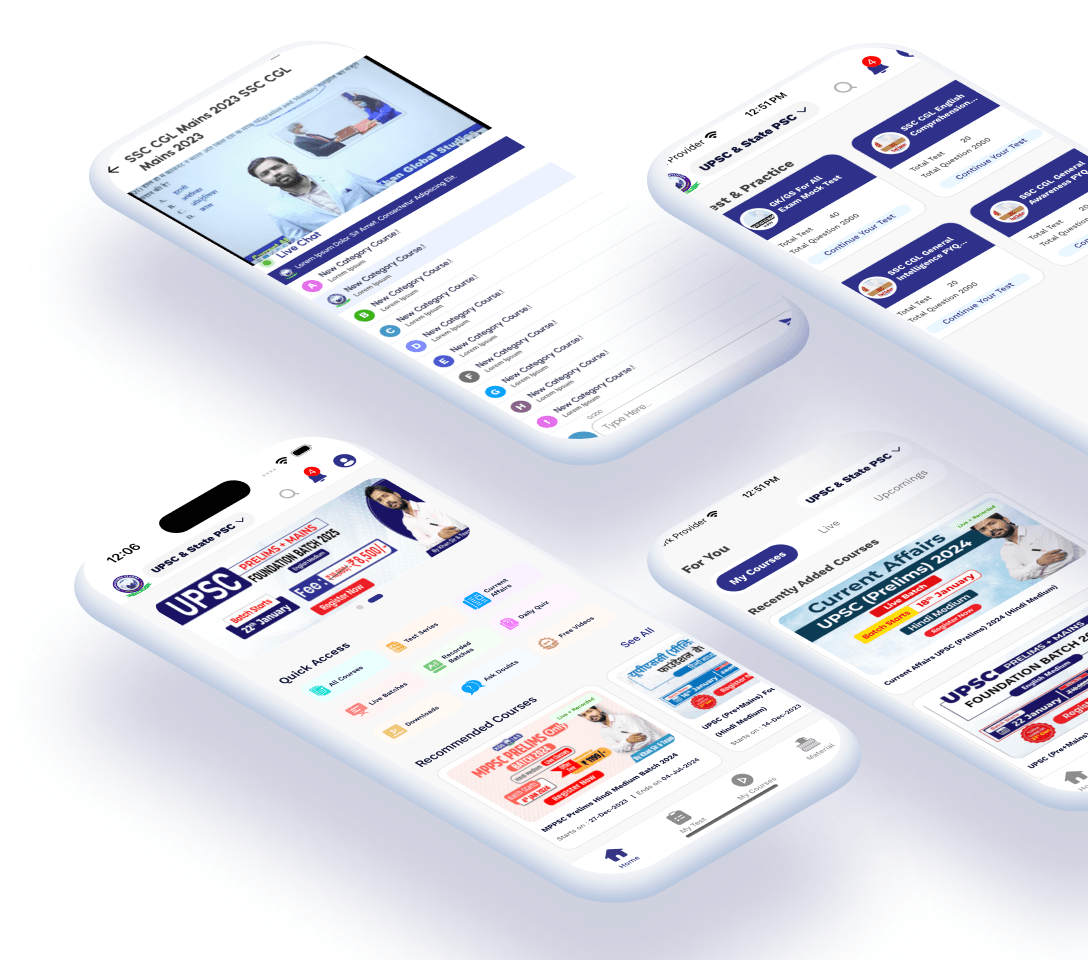
The most trusted learning platform on your phone
With our training programs, learning online can be a very exciting experience! Take the next step toward achieving your professional and personal objectives



Course Related Query:
Ask Your DoubtsStore Related Query:store@khanglobalstudies.comNCERT Books
Resources
We love learning. Through our innovative solutions, we encourage ourselves, our teams, and our Students to grow. We welcome and look for diverse perspectives and opinions because they enhance our decisions. We strive to understand the big picture and how we contribute to the company’s objectives. We approach challenges with optimism and harness the power of teamwork to accomplish our goals. These aren’t just pretty words to post on the office wall. This is who we are. It’s how we work. And it’s how we approach every interaction with each other and our Students.
Come with an open mind, hungry to learn, and you’ll experience unmatched personal and professional growth, a world of different backgrounds and perspectives, and the freedom to be you—every day. We strive to build and sustain diverse teams and foster a culture of belonging. Creating an inclusive environment where every students feels welcome, appreciated, and heard gives us something to feel (really) good about.
Get Free academic Counseling & Course Details