You're all caught up—no notifications available.
Explore All Exams at KGS


All Exams
Explore All Exams at KGS

Khan Sir Courses
Geography I Polity I History | World Map I Indian Map I Economics I Biology

UPSC & State PSC
UPSC I BPSC I UP-PSC I MP-PSC

State Exams
UP I Bihar I MP | Rajasthan

NEET | JEE | CUET
NEET | JEE | CUET

Defence Exams
NDA I CDS I CAPF I AFCAT I SSB I Agniveer

Police Exams
UP SI | Bihar SI | Delhi Police | UP Constable

SSC Exams
CGL I CPO I CHSL I MTS I SSC GD I Delhi Police

Foundation Courses
Physics I Chemistry I Biology I History I Geography I Polity I NCERT I Math I English | Map I Reasoning

Railway Exams
RRB | RPF

Teaching Exams
TET | Teaching | UGC

Banking Exams
SBI | RBI | IBPS

Engineering Exams
Civil | Electrical | Mechanical
UGC NET
UGC NET/JRF
Current Affairs provides you with the best compilation of the Daily Current Affairs taking place across the globe: National, International, Sports, Science and Technology, Banking, Economy, Agreement, Appointments, Ranks, and Report and General Studies

SYLLABUS
GS-2: Issues relating to development and management of Social Sector/Services relating to Health.
GS-3: Science and Technology- Developments and their Applications and Effects in Everyday Life.
Context: Recently, Scientists at CSIR – National Institute for Interdisciplinary Science and Technology (CSIR–NIIST), Thiruvananthapuram, have developed ‘designer rice’, a high-protein, low glycemic index (GI) grain for Type 2 diabetes.
More on the News:
• The rice is claimed to have three times the protein of normal grains while maintaining a low glycemic index, helping in diabetes management.
• The technology has also been transferred to Tata Consumer Products Limited for commercialisation, indicating its potential for large-scale public use.
About Designer Rice
• ‘Designer rice’ refers to rice that is scientifically altered using food-processing technology to improve its nutritional composition.
• It is not a simple surface fortification but a “fundamental re-architecture of the grain”, where its internal composition is redesigned.
• The process involves deconstructing rice into starch, protein, and fibre, and then reassembling them in a controlled manner, ensuring that the final product retains the same taste, appearance, and cooking properties as conventional rice.
• Technology and Production Process
o The innovation uses broken rice, usually a low-value byproduct. This is ground into flour, blended with protein and micronutrients such as iron, folic acid, and vitamin B12, and then reformed into rice-like grains.
o This approach not only improves nutrition but also adds value to agricultural waste, making it economically and environmentally significant.
• Key nutritional features of the designer rice
o Low glycaemic index (GI < 55) - Supports improved blood sugar management and metabolic regulation
o >20% Protein content - Substantially higher protein levels compared to conventional polished rice
o Improved dietary fibre - Contributes to digestive health and prolonged satiety
o Micronutrient enrichment - Includes iron, folic acid, and vitamin B12 to address dietary deficiencies
• Advantages:
o Enhanced nutritional quality in a widely consumed staple
o Improved glycaemic control supporting metabolic health
o Reduction in micronutrient deficiencies
o Delivery of essential vitamins and minerals within traditional dietary frameworks
o Improved satiety and favourable sensory acceptance
o Scalable extrusion-based production suitable for large-scale food systems
• Difference between regular rice and designer rice
o Regular white rice is predominantly carbohydrates and has a higher glycemic index (GI), leading to quicker spikes in blood sugar levels.
o Designer rice, in contrast, has higher protein content and a lower GI, making it more nutritionally balanced and beneficial for controlling blood sugar levels and enhancing satiety.
• Target Beneficiaries
o Designer rice is particularly useful for children, elderly individuals, and people recovering from illness, who have higher nutritional needs.
o It is also beneficial for vegetarians and low-income groups, as it enhances nutrition without requiring a shift to expensive dietary alternatives.
• Economic and Policy Relevance
o By utilising broken rice, the innovation increases value addition in agriculture.
o Its large-scale adoption can support food security and nutritional security, and it holds potential for integration into public food distribution and nutrition programmes.
o Promotes a circular economy in agriculture by utilising broken rice, an underutilised byproduct of milling.
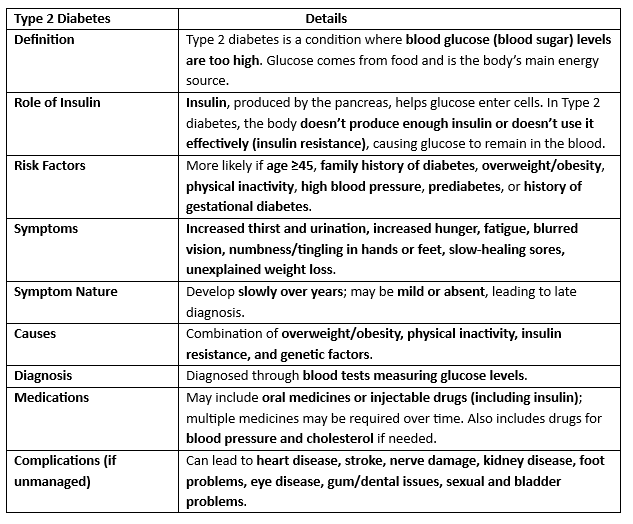
About Type 2 Diabetes
The most trusted learning platform on your phone
With our training programs, learning online can be a very exciting experience! Take the next step toward achieving your professional and personal objectives


Course Related Query:
Ask Your DoubtsStore Related Query:store@khanglobalstudies.comNCERT Books
Resources
We love learning. Through our innovative solutions, we encourage ourselves, our teams, and our Students to grow. We welcome and look for diverse perspectives and opinions because they enhance our decisions. We strive to understand the big picture and how we contribute to the company’s objectives. We approach challenges with optimism and harness the power of teamwork to accomplish our goals. These aren’t just pretty words to post on the office wall. This is who we are. It’s how we work. And it’s how we approach every interaction with each other and our Students.
Come with an open mind, hungry to learn, and you’ll experience unmatched personal and professional growth, a world of different backgrounds and perspectives, and the freedom to be you—every day. We strive to build and sustain diverse teams and foster a culture of belonging. Creating an inclusive environment where every students feels welcome, appreciated, and heard gives us something to feel (really) good about.
Get Free academic Counseling & Course Details