You're all caught up—no notifications available.
Explore All Exams at KGS


All Exams
Explore All Exams at KGS

Khan Sir Courses
Geography I Polity I History | World Map I Indian Map I Economics I Biology

UPSC & State PSC
UPSC I BPSC I UP-PSC I MP-PSC

State Exams
UP I Bihar I MP | Rajasthan

NEET | JEE | CUET
NEET | JEE | CUET

Defence Exams
NDA I CDS I CAPF I AFCAT I SSB I Agniveer

Police Exams
UP SI | Bihar SI | Delhi Police | UP Constable

SSC Exams
CGL I CPO I CHSL I MTS I SSC GD I Delhi Police

Foundation Courses
Physics I Chemistry I Biology I History I Geography I Polity I NCERT I Math I English | Map I Reasoning

Railway Exams
RRB | RPF

Teaching Exams
TET | Teaching | UGC

Banking Exams
SBI | RBI | IBPS

Engineering Exams
Civil | Electrical | Mechanical
UGC NET
UGC NET/JRF
Current Affairs provides you with the best compilation of the Daily Current Affairs taking place across the globe: National, International, Sports, Science and Technology, Banking, Economy, Agreement, Appointments, Ranks, and Report and General Studies

SYLLABUS
GS 2: Government Policies and Interventions for Development; Welfare Schemes for Vulnerable Sections of the Population.
GS 3: Indian Economy and issues relating to Planning, Mobilisation of Resources, Growth, Development and Employment; Financial inclusion; Role of microfinance institutions, SHGs, and NBFCs.
Context: Recently, the Government of India introduced the Credit Guarantee Scheme for Microfinance Institutions-2.0 (CGSMFI-2.0).
About the Scheme
• The objective of the scheme is to provide guarantee cover to banks and financial institutions through the National Credit Guarantee Trustee Company Limited (NCGTC) against expected losses.
• It applies to the losses on financial assistance extended by them to Non-Banking Financial Company-Microfinance Institutions (NBFC-MFIs) and other microfinance institutions for on-lending to small borrowers.
Key Features of the Scheme
• Eligible borrowers: Existing or new small borrowers within the regulatory definition of micro finance as prescribed by the RBI from time to time.
• Guarantee coverage: 80% of the amount in default for small, 75% for medium and 70% for large NBFC-MFIs/ MFIs.
• Guarantee Fee: 0.50% p.a., on sanctioned amount (1st year) & outstanding amount (thereafter).
• Interest Rate: Interest rates on loans extended by MLIs to NBFC-MFIs or MFIs are capped at EBLR or MCLR plus 2% per annum. For onward lending to small borrowers, these institutions must keep the interest rate at least 1% lower than their average lending rate over the past six months.
• Validity: Valid till 30.06.2026 or loans till Rs. 20,000 crores are guaranteed, whichever is earlier.
Impact of the Scheme
• The scheme will facilitate increased credit flow to the MFI sector.
• It is estimated that the scheme will facilitate on-lending by NBFC-MFIs/ MFIs to approximately 36 lakh small borrowers.
What is Microfinance?
• It is a form of financial service that provides small loans and other financial services to poor and low-income households in a consistent and legitimate way.
• It is an economic tool that promotes financial inclusion by helping low-income households escape poverty, raise incomes, and improve living standards.
• It can facilitate the achievement of national policies that target poverty reduction, women's empowerment, assistance to vulnerable groups, and an improvement in the standard of living.
Business Models for Microfinance in India
There are broadly two different approaches in India for extending microfinance services:
1. Bank-Led Approach:
• This model is primarily characterized by the Self-Help Group (SHG)-Bank Linkage Programme, pioneered by NABARD in 1992.
2. Micro Finance Institution (MFI)-led approach
• MFIs provide micro-credit and other financial services like savings, insurance, and remittances.
• Loans are typically provided through Joint Lending Groups (JLGs), informal groups of 4–10 members engaged in similar economic activities who jointly repay loans.
Microfinance Lenders in India
• Small Finance Banks: Provide basic banking services like deposits and lending to underserved sections, including small farmers, micro-industries, and unorganised entities.
• NBFC MFIs: Mobilise funds through their own resources or borrowings from banks to lend to Joint Liability Groups (JLGs).
• Non-profit MFIs: Registered under the Societies Registration Act, 1860 or the Indian Trust Act, 1880, these NGOs provide microcredit services.
• Co-Operative Societies: Registered under relevant laws, entities such as Primary Agricultural Credit Societies (PACS) offer microfinance services.
Regulation of MFIs
• The Reserve Bank of India (RBI) regulates microfinance institutions through the NBFC-MFI framework introduced in December 2011 (on the recommendation of the Malegam Committee Report).
• These guidelines address key areas such as registration eligibility, borrower protection, prevention of over-indebtedness, data privacy, and interest rate regulation, thereby ensuring greater transparency and confidence in the sector.
Significance of Microfinance
• Financial Inclusion: Microloans provide vital credit to those without access to formal banking, with nearly 70% of rural households benefiting from higher income thresholds, expanding MFI outreach and access to finance.
• Poverty Reduction: Multiple impact studies suggest Microloans have reduced rural poverty, raised household incomes, and improved spending on education and healthcare.
• Women Empowerment: Microfinance programmes empower women to start or expand businesses, boosting incomes and social status, with over 60 million women accessing loans and impacting around 300 million families in India.
• Boosting Agricultural Production: Microloans in agriculture enable farmers to invest in better inputs, leading to higher productivity and increased crop yields.
• Formation of Self-Help Groups (SHGs): SHGs facilitate collective borrowing and savings among members, promoting mutual support and reducing individual risk.
• Diversification of Income Sources: Access to microloans has allowed families to diversify their income sources beyond traditional agriculture, reducing vulnerability to market fluctuations and environmental shocks.
Key Challenges before Microfinance in India
• Regulatory Pressure: Increased regulatory scrutiny from the RBI and regional political interference (like loan waiver rumours, particularly in states like Bihar) encourages borrowers to stop payments.
• High Interest Rates: Because of their unsecured loan nature, the cost of servicing these loans is high, leading to interest rates of 12-30%.
• Operational Stress: Field-based collection mechanisms increase operational challenges and costs.
• Digital Gaps: Despite digital advancements, over 90% of repayments are made in cash, and existing deficiencies in credit reporting encourage borrowing from multiple sources simultaneously.
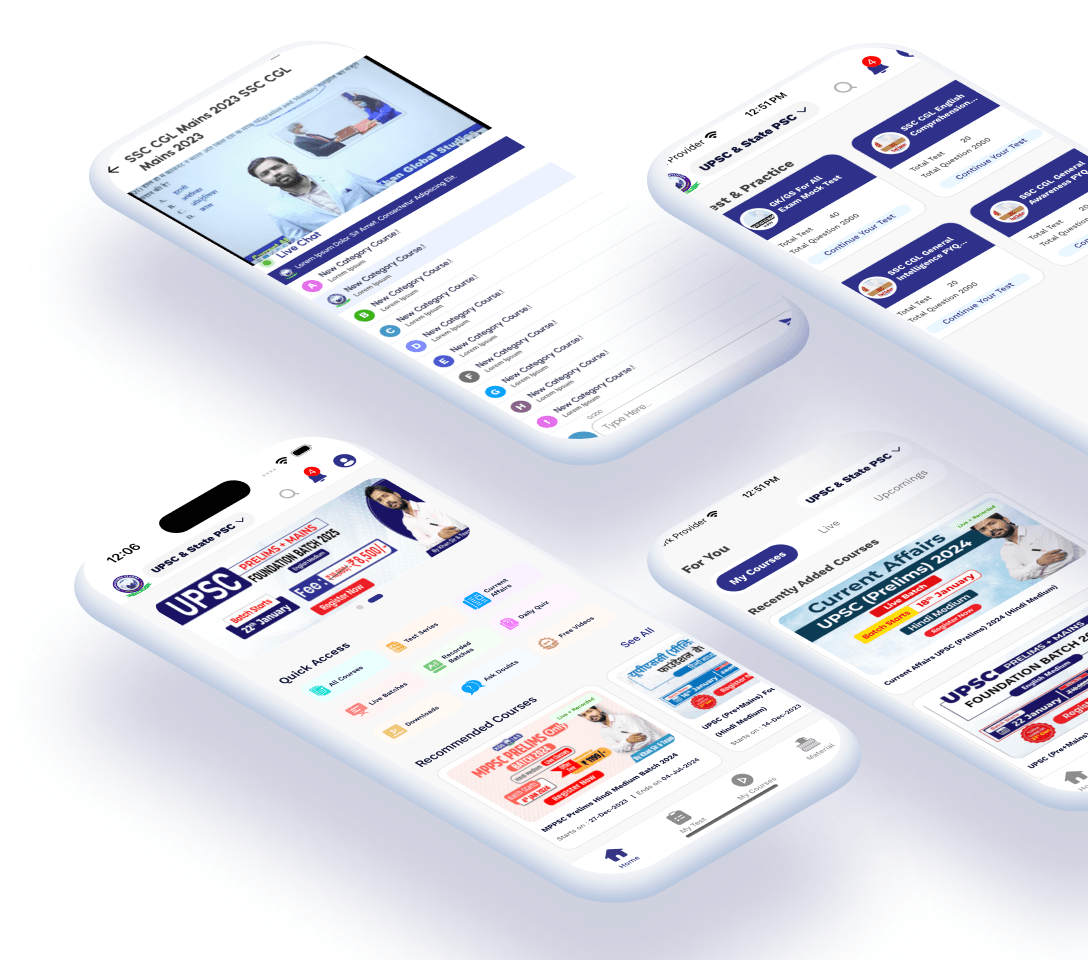
The most trusted learning platform on your phone
With our training programs, learning online can be a very exciting experience! Take the next step toward achieving your professional and personal objectives



Course Related Query:
Ask Your DoubtsStore Related Query:store@khanglobalstudies.comNCERT Books
Resources
We love learning. Through our innovative solutions, we encourage ourselves, our teams, and our Students to grow. We welcome and look for diverse perspectives and opinions because they enhance our decisions. We strive to understand the big picture and how we contribute to the company’s objectives. We approach challenges with optimism and harness the power of teamwork to accomplish our goals. These aren’t just pretty words to post on the office wall. This is who we are. It’s how we work. And it’s how we approach every interaction with each other and our Students.
Come with an open mind, hungry to learn, and you’ll experience unmatched personal and professional growth, a world of different backgrounds and perspectives, and the freedom to be you—every day. We strive to build and sustain diverse teams and foster a culture of belonging. Creating an inclusive environment where every students feels welcome, appreciated, and heard gives us something to feel (really) good about.
Get Free academic Counseling & Course Details