You're all caught up—no notifications available.
Explore All Exams at KGS


All Exams
Explore All Exams at KGS

Khan Sir Courses
Geography I Polity I History | World Map I Indian Map I Economics I Biology

UPSC & State PSC
UPSC I BPSC I UP-PSC I MP-PSC

State Exams
UP I Bihar I MP | Rajasthan

NEET | JEE | CUET | Boards
NEET | JEE | CUET | Boards

Defence Exams
NDA I CDS I CAPF I AFCAT I SSB I Agniveer

Police Exams
UP SI | Bihar SI | Delhi Police | UP Constable

SSC Exams
CGL I CPO I CHSL I MTS I SSC GD I Delhi Police

Foundation Courses
Physics I Chemistry I Biology I History I Geography I Polity I NCERT I Math I English | Map I Reasoning

Railway Exams
RRB | RPF

Teaching Exams
TET | Teaching | UGC

Banking Exams
SBI | RBI | IBPS

Engineering Exams
Civil | Electrical | Mechanical
UGC NET
UGC NET/JRF
Current Affairs provides you with the best compilation of the Daily Current Affairs taking place across the globe: National, International, Sports, Science and Technology, Banking, Economy, Agreement, Appointments, Ranks, and Report and General Studies
SYLLABUS
GS-2: Issues relating to the development and management of Social Sector/Services relating to Health, Education, Human Resources. Important International institutions, agencies, and fora- their structure and mandate.
GS-3: Science and Technology- developments and their applications and effects in everyday life.
Context: Negotiations are underway at the World Health Organization (WHO) to finalise the last unresolved part of the world’s first Pandemic Agreement, the Pathogen Access and Benefit Sharing (PABS) system.
More on the News
• Ahead of the 79th World Health Assembly in May 2026, scientists and civil society groups have raised concerns that the current draft could increase global risks if strong safety, accountability, and fairness rules are not added.
About the WHO Pandemic Agreement
• It is the world’s first global treaty focused specifically on pandemic prevention, preparedness, and response.
• It was adopted by consensus at the 78th World Health Assembly (WHA) in May 2025, after more than three years of negotiations launched during the COVID-19 pandemic.
• The agreement aims to strengthen the global health architecture through improved international coordination and equitable access to vaccines, therapeutics, and diagnostics.
• Key Features:
• Legal Status and Entry into Force:
• Institutional and Implementation Mechanisms: The WHA resolution outlining the agreement also mandates key implementation structures:
About the Pathogen Access and Benefit Sharing (PABS) System
• The PABS system is a core annex of the Pandemic Agreement currently under negotiation by the IGWG.
• It aims to address inequities exposed during COVID-19, when pathogen sharing did not translate into equitable access to vaccines and treatments.
• Objectives:
• Proposed Provisions:
Concerns Over WHO Pandemic Agreement
• Weak Equity and Benefit Sharing: Commitments under Articles 12.7 and 12.8 are diluted, with no mandatory financial contributions from companies and benefit sharing treated as optional, risking a repeat of COVID-era vaccine inequities.
• Lack of Legal and Governance Clarity: The framework contains legal loopholes, weak accountability provisions, no binding obligations for users, and limited transparency with restricted civil society participation.
• Uncertain Access for Developing Countries: There is no guaranteed access to vaccines, diagnostics or treatments, no reserved WHO stockpiles, and lack of legal certainty on licensing and technology transfer during emergencies.
• Biosecurity Risks: Safeguards against misuse of pathogen genetic data are weak, with anonymous database access, no user tracking, and no mandatory reporting of risky research, lab accidents or cyber breaches.
• Emerging Technological Threats: Advances in synthetic biology and AI could enable lab recreation or design of harmful pathogens, increasing risks of accidental release, misuse or deliberate biological harm.
Recommendations by Experts and Civil Society
• Strengthen Equity Provisions: Experts recommend mandatory financial contributions, guaranteed equitable access to vaccines and treatments, and reserved supplies for WHO emergency stockpiles.
• Ensure Legal and Institutional Clarity: They call for binding obligations for all users and legal certainty for licensing and technology transfer to developing countries.
• Improve Biosecurity Controls: Recommendations include verified identities for database access and monitoring and recording of pathogen genetic sequence usage.
• Enhance Safety and Reporting Systems: Experts urge mandatory reporting of hazardous research, lab incidents, and cyber intrusions along with stronger global biosecurity norms.
• Strengthen Global Governance: Calls include improved cybersecurity protections and expanded WHO oversight and governance of pathogen-sharing systems.
Sources
Down To Earth
WHO
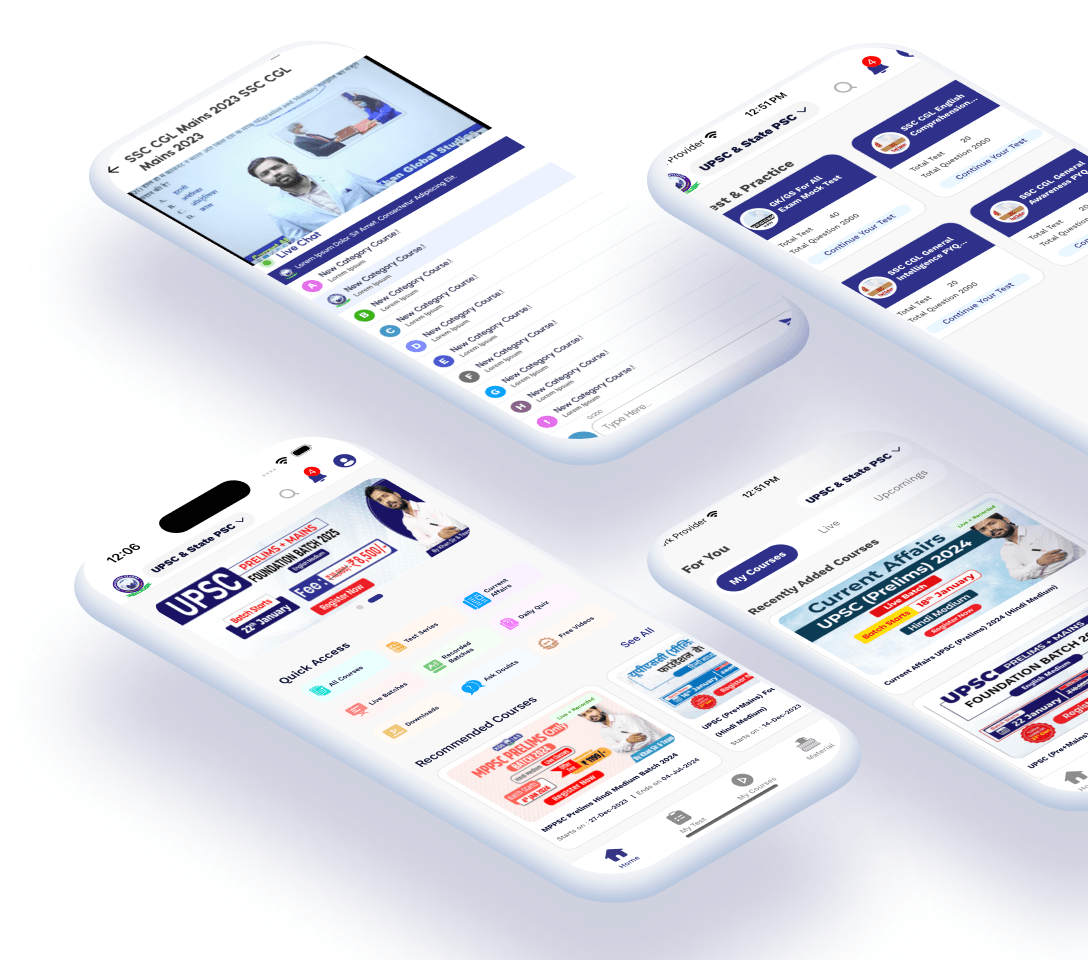
The most trusted learning platform on your phone
With our training programs, learning online can be a very exciting experience! Take the next step toward achieving your professional and personal objectives


NCERT Books
Resources
We love learning. Through our innovative solutions, we encourage ourselves, our teams, and our Students to grow. We welcome and look for diverse perspectives and opinions because they enhance our decisions. We strive to understand the big picture and how we contribute to the company’s objectives. We approach challenges with optimism and harness the power of teamwork to accomplish our goals. These aren’t just pretty words to post on the office wall. This is who we are. It’s how we work. And it’s how we approach every interaction with each other and our Students.
Come with an open mind, hungry to learn, and you’ll experience unmatched personal and professional growth, a world of different backgrounds and perspectives, and the freedom to be you—every day. We strive to build and sustain diverse teams and foster a culture of belonging. Creating an inclusive environment where every students feels welcome, appreciated, and heard gives us something to feel (really) good about.
Get Free academic Counseling & Course Details