You're all caught up—no notifications available.
Explore All Exams at KGS


All Exams
Explore All Exams at KGS

Khan Sir Courses
Geography I Polity I History | World Map I Indian Map I Economics I Biology

UPSC & State PSC
UPSC I BPSC I UP-PSC I MP-PSC

State Exams
UP I Bihar I MP | Rajasthan

NEET | JEE | CUET | Boards
NEET | JEE | CUET | Boards

Defence Exams
NDA I CDS I CAPF I AFCAT I SSB I Agniveer

Police Exams
UP SI | Bihar SI | Delhi Police | UP Constable

SSC Exams
CGL I CPO I CHSL I MTS I SSC GD I Delhi Police

Foundation Courses
Physics I Chemistry I Biology I History I Geography I Polity I NCERT I Math I English | Map I Reasoning

Railway Exams
RRB | RPF

Teaching Exams
TET | Teaching | UGC

Banking Exams
SBI | RBI | IBPS

Engineering Exams
Civil | Electrical | Mechanical
UGC NET
UGC NET/JRF
Current Affairs provides you with the best compilation of the Daily Current Affairs taking place across the globe: National, International, Sports, Science and Technology, Banking, Economy, Agreement, Appointments, Ranks, and Report and General Studies

100 years of Ol Chiki Script
Context: The President of India inaugurated the Centenary Celebration of the Ol Chiki script at an event organised by the Ministry of Culture in New Delhi, marking 100 years of the script’s creation.
More on the News
• The Ministry of Culture, in collaboration with Fagun (a monthly Santhali newspaper), organised the Inaugural Function on 16th February 2026 at Dr. Ambedkar International Centre, New Delhi.
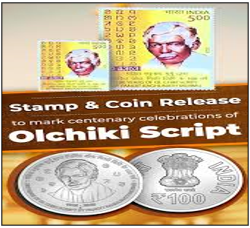
• The President of India was the Chief Guest and released a commemorative coin and postage stamp marking 100 years of the Ol Chiki script.
• Ten achievers from the Santal community were felicitated for their contributions to promoting the script.
About Ol Chiki Script
• Ol Chiki script was developed in 1925 by Pandit Raghunath Murmu specifically for the Santhali language.
• Santhali was included in the Eighth Schedule of the Constitution through the 92nd Constitution Amendment Act, 2003.
• Ol Chiki is the official script of the Santhali, a major tribal language spoken in Jharkhand, Odisha, West Bengal, Assam, and Bihar, and among diaspora communities.
• The script contains 30 letters (6 vowels and 24 consonants) designed to accurately represent Santhali phonetics.
• It is written from left to right and has two main styles:
• It was created to replace earlier use of borrowed scripts like Roman, Bengali, Odia, and Devanagari, which could not accurately represent Santhali sounds.
• In December 2025, the Constitution of India was officially translated into the Santhali language using the Ol Chiki script, marking a major step towards linguistic inclusion and wider constitutional accessibility.
SAHI and BODH Initiatives
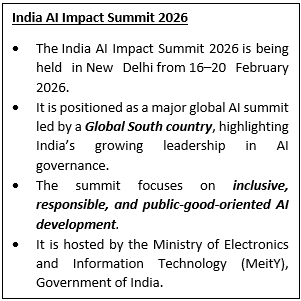
Context: Recently, the Union Minister of Health and Family Welfare launched two key national initiatives, Strategy for Artificial Intelligence in Healthcare for India (SAHI) and the Benchmarking Open Data Platform for Health AI (BODH), at the India AI Summit / AI Impact Summit 2026 in New Delhi.
About the Strategy for Artificial Intelligence in Healthcare for India (SAHI)
• SAHI is a national guidance and governance framework to enable the safe, ethical, evidence-based, and inclusive adoption of Artificial Intelligence across India’s healthcare system.
• It provides strategic direction on governance, data stewardship, validation, deployment and monitoring of AI solutions.
• The framework supports States and institutions in responsible AI adoption alignment with public health priorities.
• SAHI serves as a policy compass and national roadmap for transparent, accountable, and people-centric use of AI in healthcare.
• It aims to ensure that AI solutions are systematically validated, deployed responsibly, and continuously monitored within the healthcare ecosystem.
About the Benchmarking Open Data Platform for Health AI (BODH)
• BODH is a privacy-preserving benchmarking platform developed by the Indian Institute of Technology Kanpur in collaboration with the National Health Authority (NHA).
• It enables rigorous evaluation and validation of AI models using diverse real-world health data without sharing the underlying datasets.
• Instead of moving sensitive patient data across institutions, BODH allows AI models to be tested in a controlled, privacy-protecting environment.
• The platform strengthens transparent, trust and quality assurance in Health AI deployment.
Birth Anniversary of Sant Sevalal Maharaj
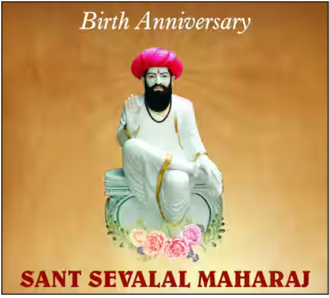
Context: The Prime Minister of India paid tribute to social reformer Sant Sevalal Maharaj on his 287th birth anniversary.
About Sant Sevalal Maharaj
• Sant Sevalal Maharaj was born on February 15, 1739 at Surgondankoppa in Shivamogga district of Karnataka.
• He is regarded as a spiritual guru and social reformer of the Banjara community and is widely revered across several Indian states.
• As a youth spiritual figure, he travelled across the country with his Ladeniya troupe, serving forest dwellers and nomadic tribes.
• He dedicated his life to the upliftment of tribal forest dwellers and nomadic communities, especially the Banjaras.
• He is believed to have possessed deep knowledge of Ayurveda and Naturopathy, using traditional healing methods to serve people.
• He worked to eradicate myths and superstitions prevalent among tribal communities and introduced social reforms in their way of life.
• His efforts contributed to the transition of Banjaras from nomadic lifestyles to settled habitations known as Tandas.
• Many traditions hold that he spent time in the Hyderabad region and served people during disease outbreaks.
• On December 4, 1806, he passed away at Ruhigarh in the Yavatmal district of Maharashtra.
• His Samadhi Sthal is located at Pohradevi in the Washim district of Maharashtra, which is also known as Banjara Kashi, an important pilgrimage centre for followers.
PM RAHAT Scheme
Context: Recently, the Prime Minister of India approved the launch of the PM RAHAT (Road Accident Victim Hospitalisation and Assured Treatment) Scheme to ensure timely and cashless emergency care for accident victims.
More on the News
• The scheme reflects a governance approach rooted in service, compassion, and protection of vulnerable citizens.
• It aims to ensure that no road accident victim is denied immediate medical treatment due to financial constraints.
• The initiative prioritises intervention during the Golden Hour, as studies indicate that nearly 50% of road accident deaths can be prevented with timely hospitalization.
Key Features of PM RAHAT
• The scheme provides cashless treatment up to ₹1.5 lakh per eligible road accident victim on any category of road for a period of seven days from the date of the accident.
• Stabilisation treatment will be provided for up to 24 hours in non-life-threatening cases and up to 48 hours in life-threatening cases, subject to police authentication through an integrated digital system.
• The scheme is integrated with the Emergency Response Support System (ERSS) 112 helpline, ensuring that victims reach hospitals within the Golden Hour.
• Victims, Rah-Veer (Good Samaritans), or any bystander at the accident site can dial 112 to obtain details of the nearest designated hospital and request ambulance assistance.
• Reimbursement to hospitals will be made through the Motor Vehicle Accident Fund (MVAF).
• In cases where the offending vehicle is insured, payment will be drawn from contributions made by General Insurance Companies, while uninsured and hit-and-run cases will be covered through budgetary support from the Government of India.
• Claims approved by the State Health Agency will be settled within 10 days, ensuring financial certainty for hospitals and uninterrupted treatment.
• The scheme is implemented through the integration of the Electronic Detailed Accident Report (eDAR) platform of the Ministry of Road Transport and Highways with the Transaction Management System 2.0 of the National Health Authority.
• This digital integration enables a seamless workflow from accident reporting and hospital admission to police authentication, treatment delivery, claim processing and final payment.
International Conference on Dam Safety (ICDS 2026)
Context: India hosted the International Conference on Dam Safety (ICDS 2026) at the Indian Institute of Science (IISc), Bengaluru.
More on the News
• The International Conference on Dam Safety (ICDS) 2026 is the second conference in the planned series under the Dam Rehabilitation and Improvement Project (DRIP) Phase II and III.
• The conference was organised by the Ministry of Jal Shakti in collaboration with the Government of Karnataka, Central Water Commission (CWC), IISc Bangalore, and the World Bank.
• The inaugural session saw the launch of DAMCHAT, an AI-powered platform developed by the International Centre of Excellence for Dams (ICED) at IIT Roorkee.
• The Jal Shakti Data Management platform of the National Water Informatics Centre (NWIC) was also unveiled to strengthen digital decision-support systems.
• The conference deliberated on ageing dams, climate resilience, sediment management, risk-informed decision-making, and coordinated reservoir operations.
About the Dam Rehabilitation and Improvement Project (DRIP)
• DRIP is a Government of India programme supported by the World Bank and AIIB to improve dam safety, performance, and resilience.
• Implemented by the Ministry of Jal Shakti (Department of Water Resources, River Development & Ganga Rejuvenation).
• Phase-I (2012-2021) rehabilitated 223 dams in 7 states and focused on rehabilitation and safety strengthening of ageing dams.
• DRIP Phase II and III (2021-2031) is a large-scale national programme implemented in two overlapping phases of six years each. It covers 736 dams across 19 States with a total outlay of ₹ 10,211 crore.
• The programme strengthens the institutional architecture of dam safety and governance mechanisms.
• It modernises operation and maintenance (O&M) practices and supports physical rehabilitation and dam instrumentation.
• DRIP also enhances climate resilience and disaster preparedness through measures such as early warning systems, dam break analyses, and Emergency Action Plans (EAPs).
• As part of institutional strengthening, International Centres of Excellence for Dams (ICED) have been established at IIT Roorkee and IISc Bengaluru.
• The project contributes to long-term capacity building and supports India’s broader dam safety ecosystem, including the Dam Safety Act, 2021.
Dornier 228 Aircraft
Context: Recently, the Ministry of Defence signed a contract with Hindustan Aeronautics Limited (HAL) for the acquisition of Dornier 228 aircraft for the Indian Coast Guard (ICG).
More on the News
• It involves the procurement of eight Dornier 228 aircraft with Operational Role Equipment.
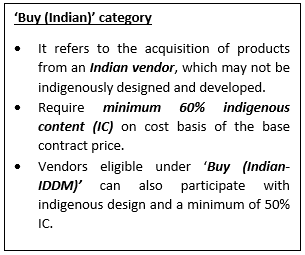
• The deal is valued at ₹2,312 crore and falls under the Buy (Indian) category.
• The contract was signed with HAL’s Transport Aircraft Division, Kanpur.
• The programme is expected to generate significant direct & indirect employment, strengthening HAL’s production ecosystem and MSMEs supply chain, and create opportunities in Maintenance, Repair & Overhaul (MRO) and lifecycle support.
• The deal reinforces the Government’s commitment to Aatmanirbhar Bharat and Make-in-India while bolstering India’s maritime security architecture.
• This is part of the capacity building exercise by the Indian Coast Guard, which aims to increase its fleet of air assets from the existing 80, which includes aircrafts and choppers, to 100 by 2030.
• This is the second major defence deal with HAL in FY 2025–26 (after the LCA Mk1A deal with the IAF).
About Dornier 228 Aircraft
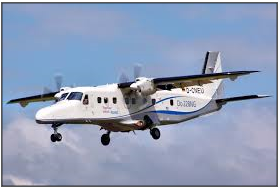
• Dornier 228 is a twin-engine turboprop, multi-mission aircraft manufactured by HAL.
• Primarily operated by the Indian Coast Guard.
• Key Features:
• Operated by ICG in two variants:
• The aircraft has quick role-change capability and supports:
The most trusted learning platform on your phone
With our training programs, learning online can be a very exciting experience! Take the next step toward achieving your professional and personal objectives


NCERT Books
Resources
We love learning. Through our innovative solutions, we encourage ourselves, our teams, and our Students to grow. We welcome and look for diverse perspectives and opinions because they enhance our decisions. We strive to understand the big picture and how we contribute to the company’s objectives. We approach challenges with optimism and harness the power of teamwork to accomplish our goals. These aren’t just pretty words to post on the office wall. This is who we are. It’s how we work. And it’s how we approach every interaction with each other and our Students.
Come with an open mind, hungry to learn, and you’ll experience unmatched personal and professional growth, a world of different backgrounds and perspectives, and the freedom to be you—every day. We strive to build and sustain diverse teams and foster a culture of belonging. Creating an inclusive environment where every students feels welcome, appreciated, and heard gives us something to feel (really) good about.
Get Free academic Counseling & Course Details