You're all caught up—no notifications available.
Explore All Exams at KGS


All Exams
Explore All Exams at KGS

Khan Sir Courses
Geography I Polity I History | World Map I Indian Map I Economics I Biology

UPSC & State PSC
UPSC I BPSC I UP-PSC I MP-PSC

State Exams
UP I Bihar I MP | Rajasthan

NEET | JEE | CUET
NEET | JEE | CUET

Defence Exams
NDA I CDS I CAPF I AFCAT I SSB I Agniveer

Police Exams
UP SI | Bihar SI | Delhi Police | UP Constable

SSC Exams
CGL I CPO I CHSL I MTS I SSC GD I Delhi Police

Foundation Courses
Physics I Chemistry I Biology I History I Geography I Polity I NCERT I Math I English | Map I Reasoning

Railway Exams
RRB | RPF

Teaching Exams
TET | Teaching | UGC

Banking Exams
SBI | RBI | IBPS

Engineering Exams
Civil | Electrical | Mechanical
UGC NET
UGC NET/JRF
Current Affairs provides you with the best compilation of the Daily Current Affairs taking place across the globe: National, International, Sports, Science and Technology, Banking, Economy, Agreement, Appointments, Ranks, and Report and General Studies

SYLLABUS
GS-2: Functions and Responsibilities of various Constitutional Bodies; Issues Relating to Development and Management of Social Sector/Services relating to Health, Education, Human Resource.
Context: The Supreme Court of India recently reaffirmed the mandatory nature of admissions under the Right of Children to Free and Compulsory Education (RTE) Act, 2009, strengthening the legal enforceability of inclusive education.
More on the News
• The judgment gains importance in light of recurring disputes between private schools and state authorities regarding the implementation of the 25% reservation for children from Economically Weaker Sections (EWS) and disadvantaged groups.
• The judgment arose from a Lucknow-based private school’s refusal to admit a child selected under the 25% RTE quota in a neighbourhood school, despite the state’s allocation.
• The Court has described RTE admissions, especially for pre-primary/class I students from weaker sections, as a “national mission”, underscoring the constitutional value of equitable access to education.
Key Observations of the Supreme Court
• The Supreme Court held that schools are bound to admit students allotted by the State under the RTE Act without delay, and cannot deny admission on procedural or administrative grounds.
• It clarified that disputes related to eligibility or reimbursement must be addressed separately and cannot be used as a basis to withhold admission.
• The Court emphasised that the 25% reservation under Section 12(1)(c) for pre-primary/class I students is a “national mission”, aimed at promoting social justice and reducing educational inequality.
• It observed that denying admission under the RTE framework amounts to a violation of the fundamental right to education under Article 21A.
• The judgment further stressed that once the government finalises the list of beneficiaries, private schools do not have discretionary authority to override such decisions.
• The Court directed the appropriate authorities to frame legally binding rules under Section 38 to implement the 25% quota, moving beyond SOP style guidance.
About the RTE Act, 2009
• The Right of Children to Free and Compulsory Education Act, 2009, operationalises Article 21A of the Constitution, introduced by the 86th Constitutional Amendment.
• It guarantees free and compulsory education to all children aged 6–14 years in neighbourhood schools.
• Under Section 12(1)(c) of the Act, private unaided schools are required to reserve 25% of entry-level seats for children from EWS and disadvantaged groups.
• The Act prohibits screening tests, capitation fees, and discriminatory practices, thereby promoting equitable access to education.
Significance of the Judgment
• Strengthening Fundamental Rights: The ruling reinforces the enforceability of Article 21A, ensuring that children’s right to education cannot be undermined by institutional or administrative barriers.
• Advancing Social Inclusion: By mandating strict compliance with EWS admissions, the judgment promotes integration of children from diverse socio-economic backgrounds, contributing to substantive equality.
• Curbing Arbitrary Practices by Schools: The decision limits the discretion of private schools and ensures that state-allotted admissions are binding, thereby preventing unjust denial of seats.
• Boosting Implementation of RTE: The judgment strengthens the legal framework and provides clarity, thereby improving implementation of Section 12(1)(c) across states.
Challenges in Implementation
• Private schools often express concerns regarding delays in reimbursement by state governments, which affects compliance.
• Barriers such as lack of awareness among beneficiaries, documentation requirements, and administrative inefficiencies continue to limit access.
• Instances of social discrimination and hidden costs within schools can undermine the objective of inclusive education.
• Exemptions for certain categories of institutions, such as minority schools, raise concerns about uneven implementation of the RTE provisions.
Way Forward
• Governments must ensure timely and adequate reimbursement to private schools to address financial concerns and improve cooperation.
• Adoption of transparent and digital admission systems can minimise disputes and enhance accountability.
• Greater focus on awareness campaigns and outreach programmes is needed to ensure that eligible families benefit from the RTE provisions.
• Strengthening monitoring and grievance redressal mechanisms, including institutions like the National Commission for Protection of Child Rights (NCPCR), can improve implementation outcomes.
SOURCES:
Newsonair
Economictimes
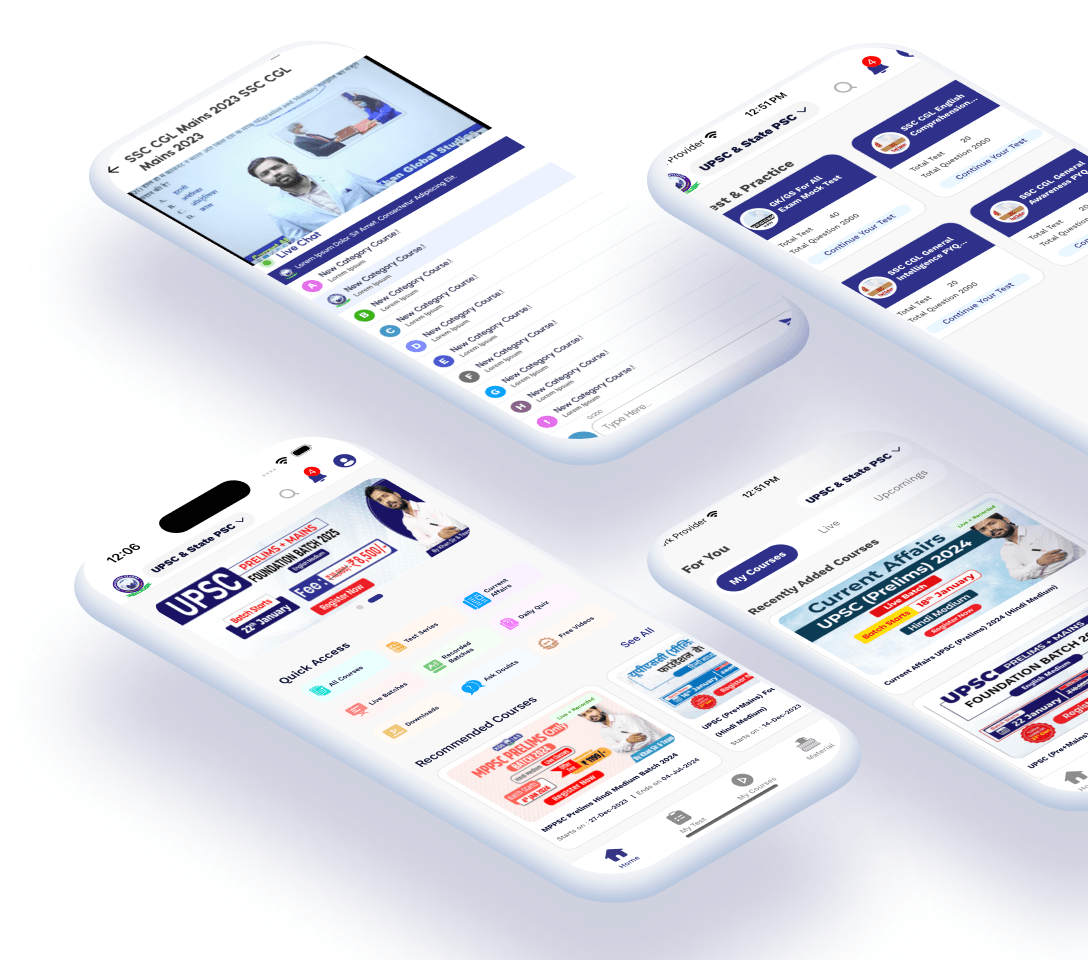
The most trusted learning platform on your phone
With our training programs, learning online can be a very exciting experience! Take the next step toward achieving your professional and personal objectives


Course Related Query:
Ask Your DoubtsStore Related Query:store@khanglobalstudies.comNCERT Books
Resources
We love learning. Through our innovative solutions, we encourage ourselves, our teams, and our Students to grow. We welcome and look for diverse perspectives and opinions because they enhance our decisions. We strive to understand the big picture and how we contribute to the company’s objectives. We approach challenges with optimism and harness the power of teamwork to accomplish our goals. These aren’t just pretty words to post on the office wall. This is who we are. It’s how we work. And it’s how we approach every interaction with each other and our Students.
Come with an open mind, hungry to learn, and you’ll experience unmatched personal and professional growth, a world of different backgrounds and perspectives, and the freedom to be you—every day. We strive to build and sustain diverse teams and foster a culture of belonging. Creating an inclusive environment where every students feels welcome, appreciated, and heard gives us something to feel (really) good about.
Get Free academic Counseling & Course Details