You're all caught up—no notifications available.
Explore All Exams at KGS


All Exams
Explore All Exams at KGS

Khan Sir Courses
Geography I Polity I History | World Map I Indian Map I Economics I Biology

UPSC & State PSC
UPSC I BPSC I UP-PSC I MP-PSC

State Exams
UP I Bihar I MP | Rajasthan

NEET | JEE | CUET
NEET | JEE | CUET

Defence Exams
NDA I CDS I CAPF I AFCAT I SSB I Agniveer

Police Exams
UP SI | Bihar SI | Delhi Police | UP Constable

SSC Exams
CGL I CPO I CHSL I MTS I SSC GD I Delhi Police

Foundation Courses
Physics I Chemistry I Biology I History I Geography I Polity I NCERT I Math I English | Map I Reasoning

Railway Exams
RRB | RPF

Teaching Exams
TET | Teaching | UGC

Banking Exams
SBI | RBI | IBPS

Engineering Exams
Civil | Electrical | Mechanical
UGC NET
UGC NET/JRF
Current Affairs provides you with the best compilation of the Daily Current Affairs taking place across the globe: National, International, Sports, Science and Technology, Banking, Economy, Agreement, Appointments, Ranks, and Report and General Studies

SYLLABUS
GS-3: Conservation, environmental pollution and degradation, environmental impact assessment.
Context: The Ministry of Environment, Forest and Climate Change has notified the Plastic Waste Management (Amendment) Rules, 2026, amending the Plastic Waste Management Rules, 2016, under the Environment Protection Act, 1986, to strengthen the Extended Producer Responsibility (EPR) framework.
Key Features of 2026 Amendment Rules
• Carry-forward of EPR Targets: Companies failing to meet recycling targets in 2025–26 can carry forward the shortfall for up to 3 years (2026–27 onwards), provided at least one-third of the deficit is met annually.
• Mandatory Use of Recycled Plastic: Producers, importers, and brand owners must use recycled plastic in packaging, with progressive category-wise targets: Category I (Rigid plastic) from 30% to 60% by 2028–29, Category II (Flexible plastic) from 10% to 20%, and Category III (Multi-layered plastic) from 5% to 10%.
• Reuse Obligations: Specific reuse targets are introduced for rigid packaging, including about 10% for small containers and up to 70% for large water packaging.
• Tradable EPR Certificates (Market Mechanism): A plastic credit trading system is introduced where companies can buy certificates from those exceeding targets. This enables cost-efficient compliance but reduces direct responsibility.
• End-of-Life Disposal Allowed: The rules explicitly include energy recovery methods such as waste-to-energy (WTE), co-processing in cement and steel industries, waste-to-oil conversion, and use in road construction.
• Exemptions from Targets: Recycled content targets are not applicable were prohibited by food safety norms and drug regulations.
• Strengthened Monitoring & Governance: A centralised reporting system will be implemented by the Central Pollution Control Board, along with State/UT-level monitoring committees and local bodies as enforcement authorities. Compliance will be tracked through a digital portal.
• Continuation of EPR Framework (since 2022): The rules retain the 100% collection target (by 2024–25) and phased increase in recycling and reuse.
Concerns / Challenges
• Dilution of Accountability: The carry-forward provision is seen as an “escape route” for companies and may delay real action by major FMCG firms.
• Questionable Effectiveness of Waste-to-Energy: Burning plastic is linked to toxic emissions (dioxins, furans, heavy metals) and micro/nano-plastic pollution, and is criticised for lacking scientific backing.
• Weak Compliance & Data Gaps: There is no verified evidence of achieving the 100% EPR collection target, with heavy reliance on self-reporting and detection of fake EPR certificates (~6 lakh cases).
• Limited Recycling & Reuse Capacity: India lacks infrastructure for large-scale reuse systems and efficient segregation and processing, while packaging (≈40% of plastic use) remains largely single-use.
• Exemptions May Undermine Targets: Exclusion of food and pharmaceutical sectors reduces the scope of the circular economy transition.
• Credit Trading Risks: Companies may buy credits instead of recycling, thereby weakening the “polluter pays” principle.
Significance
• Push Towards Circular Economy: Mandatory recycled content and reuse obligations encourage resource efficiency and reduced use of virgin plastic.
• Market-Based Environmental Governance: Tradable certificates introduce flexibility and cost efficiency while aligning with global carbon and credit trading models.
• Institutional Strengthening: A multi-level governance system involving the Central Pollution Control Board, State/UTs, and local bodies enhances monitoring and accountability.
• Policy Continuity with Evolution: The amendment builds on the EPR framework (2022) and moves toward a more structured yet flexible compliance system.
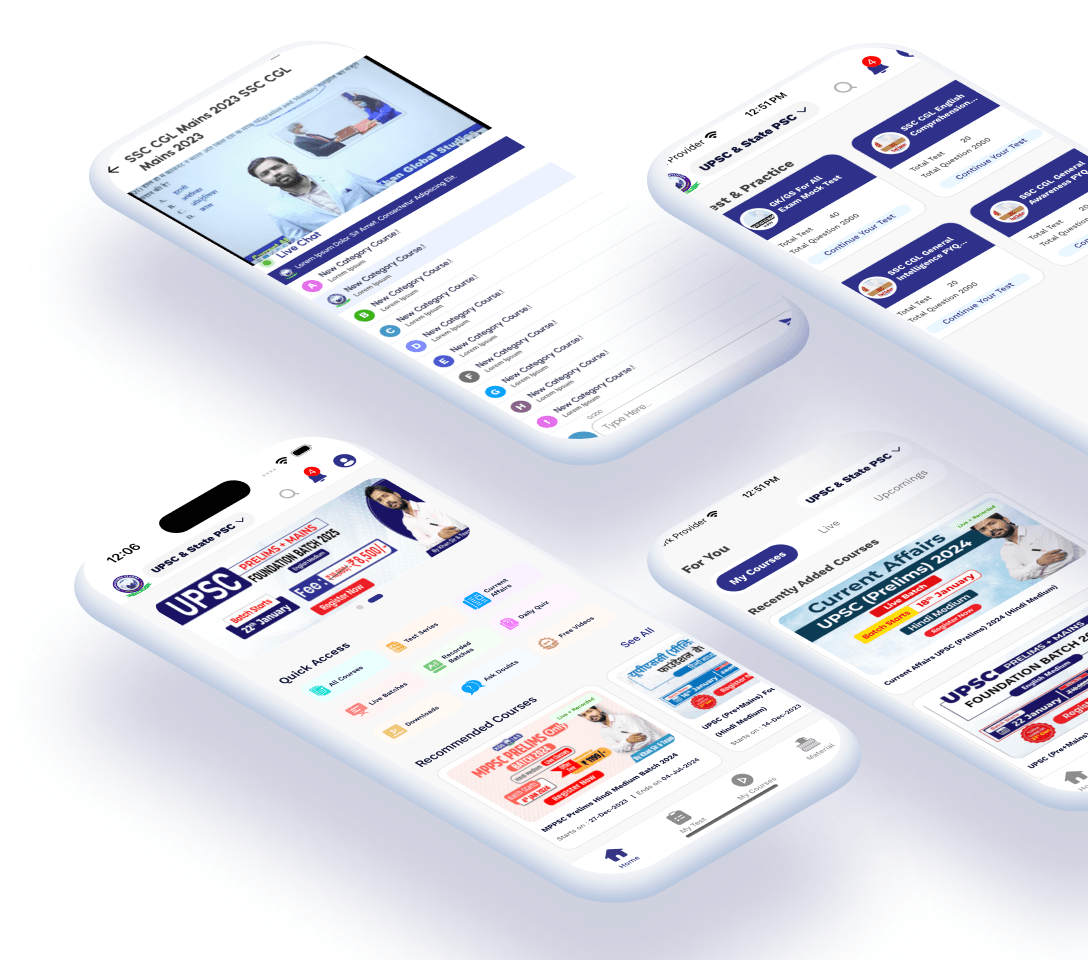
The most trusted learning platform on your phone
With our training programs, learning online can be a very exciting experience! Take the next step toward achieving your professional and personal objectives



Course Related Query:
Ask Your DoubtsStore Related Query:store@khanglobalstudies.comNCERT Books
Resources
We love learning. Through our innovative solutions, we encourage ourselves, our teams, and our Students to grow. We welcome and look for diverse perspectives and opinions because they enhance our decisions. We strive to understand the big picture and how we contribute to the company’s objectives. We approach challenges with optimism and harness the power of teamwork to accomplish our goals. These aren’t just pretty words to post on the office wall. This is who we are. It’s how we work. And it’s how we approach every interaction with each other and our Students.
Come with an open mind, hungry to learn, and you’ll experience unmatched personal and professional growth, a world of different backgrounds and perspectives, and the freedom to be you—every day. We strive to build and sustain diverse teams and foster a culture of belonging. Creating an inclusive environment where every students feels welcome, appreciated, and heard gives us something to feel (really) good about.
Get Free academic Counseling & Course Details