Explore All Exams at KGS


All Exams
Explore All Exams at KGS

Khan Sir Courses
Geography I Polity I History | World Map I Indian Map I Economics I Biology

UPSC & State PSC
UPSC I BPSC I UP-PSC I MP-PSC

State Exams
UP I Bihar I MP | Rajasthan

NEET | JEE | CUET
NEET | JEE | CUET

Defence Exams
NDA I CDS I CAPF I AFCAT I SSB I Agniveer

Police Exams
UP SI | Bihar SI | Delhi Police | UP Constable

SSC Exams
CGL I CPO I CHSL I MTS I SSC GD I Delhi Police

Foundation Courses
Physics I Chemistry I Biology I History I Geography I Polity I NCERT I Math I English | Map I Reasoning

Railway Exams
RRB | RPF

Teaching Exams
TET | Teaching | UGC

Banking Exams
SBI | RBI | IBPS

Engineering Exams
Civil | Electrical | Mechanical
UGC NET
UGC NET/JRF
Current Affairs provides you with the best compilation of the Daily Current Affairs taking place across the globe: National, International, Sports, Science and Technology, Banking, Economy, Agreement, Appointments, Ranks, and Report and General Studies
Current Affairs
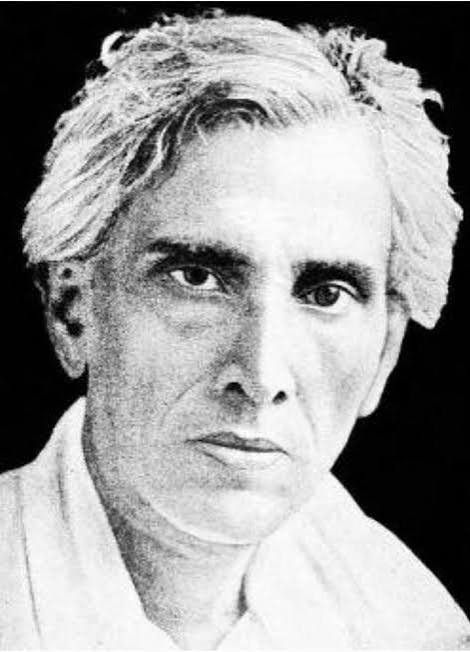
150th Birth Anniversary of Saratchandra Chattopadhyay
Context: Prime Minister Narendra Modi paid tribute to Bengali writer Saratchandra Chattopadhyay on his 150th birth anniversary on 15 September 2026.
About Saratchandra Chattopadhyay
• Birth: Born on 15 September 1876 at Debanandapur, Hooghly district, Bengal, Saratchandra Chattopadhyay (1876–1938) was a renowned Bengali novelist and short-story writer.
• Literary themes: His writings offered a sensitive portrayal of 19th-century India, particularly rural Bengali society, and explored social inequalities, contemporary social practices and the lives of women. His works were translated into every Indian language and several foreign languages.
• Burma association: He moved to Rangoon (present-day Yangon) in 1903, where he worked in government service and later in the Burma Railway; he returned to Bengal in 1916, after spending about 13 years in Burma.
• Literary output: He wrote over 30 novels, novellas and stories, many of which became widely translated and adapted into films.
Literary and Nationalist Contributions
• Major works: Devdas, Parineeta, Charitraheen, Nishkriti, Srikanta, Biraj Bou, Palli Samaj, Grihadaha and Sesh Prashna are among his important works.
• Pather Dabi (1926): A political novel centred on revolutionary resistance to British rule, it was banned by the colonial government for its anti-British content.
• Freedom movement: He participated in the Non-Cooperation Movement and served as President of the Howrah District Congress Committee from 1921 to 1936. His writings also reflected themes of nationalism and social reform.
• Honours: He received the Jagattarini Gold Medal from the University of Calcutta in 1923 and an honorary D.Litt. from the University of Dacca in 1936. He passed away in Calcutta on 16 January 1938.
32nd World Ozone Day
Context: The 32nd World Ozone Day (International Day for the Preservation of the Ozone Layer) was observed on 16 September 2026 with the theme “Global Action for a Cooler Planet”.
World Ozone Day and the Montreal Protocol
• UNGA, 1994: The United Nations General Assembly, through Resolution 49/114, proclaimed 16 September as the International Day for the Preservation of the Ozone Layer, commemorating the signing of the Montreal Protocol on 16 September 1987. The observance began in 1995.
• Vienna Convention, 1985: Established the framework for international cooperation to protect the ozone layer, followed by the Montreal Protocol, 1987, which controls and phases out ozone-depleting substances (ODS), including CFCs, halons and HCFCs.
• Universal participation: The Vienna Convention and Montreal Protocol became the first treaties in UN history to achieve universal ratification in 2009. The Montreal Protocol has led to the phase-out of around 99% of ozone-depleting chemicals used in products such as refrigeration and air-conditioning equipment.
• India: India became a Party to the Vienna Convention in March 1991, and the Montreal Protocol in June 1992 and has met its commitments under the Montreal Protocol.
Kigali Amendment and India
• Kigali Amendment, 2016: It introduced a global phasedown of hydrofluorocarbons (HFCs), which do not deplete the ozone layer but are potent greenhouse gases widely used in refrigeration and air-conditioning. Full implementation could avoid up to 0.5°C of global warming by the end of the century.
• India ratified the Kigali Amendment in September 2021, which entered into force for India on 26 December 2021.
• 2026 initiatives: On World Ozone Day, India launched the Net Zero Portal and National Action Plan on Climate Change (NAPCC) Dashboard to track climate commitments, emissions, & progress for a low-carbon future.
India's 51st Doppler Weather Radar
Context: India’s 51st Doppler Weather Radar (DWR) was inaugurated recently at Sambalpur, Odisha, strengthening weather observation, forecasting and early-warning capabilities across Western Odisha and adjoining regions.
Doppler Weather Radar: Working and Applications
• Doppler Weather Radar is a remote-sensing system that uses the Doppler effect to measure the movement and velocity of atmospheric particles such as raindrops, snow and hail. It transmits electromagnetic pulses and analyses the signals reflected from precipitation particles.
• The return time of the signal indicates the distance of the precipitation, while the Doppler frequency shift provides information about the movement and velocity of precipitation particles.
• Compared with conventional weather radar, DWR provides reflectivity along with velocity and spectral-width information, improving the tracking of moving weather systems and severe weather.
• DWR observations support nowcasting and short-term forecasting of thunderstorms, heavy rainfall and other severe weather events. They also aid cyclone monitoring, disaster management, agriculture, aviation and water-resource management.
• Modern DWRs equipped with dual-polarisation technology can transmit signals in horizontal and vertical orientations, helping identify precipitation characteristics and improve rainfall estimation and detection of severe weather.
India’s Expanding DWR Network
• With the Sambalpur installation, Odisha now has three DWRs—at Gopalpur, Paradip and Sambalpur. The new radar will improve observations over Western Odisha and provide meteorological inputs for adjoining areas of southern Jharkhand, northern Chhattisgarh and parts of North Andhra Pradesh and West Bengal.
• India’s DWR network has expanded from 14 radars in 2014 to 51 in 2026. Around 40 additional radars are planned under Mission Mausam.
• The radar expansion is being complemented by a multi-layered observation network, including Automatic Weather Stations, rain gauges, radiosonde stations and microwave radiometers, to improve local weather observations and enable more localised forecasting.
• Mission Mausam, approved in September 2024 with an outlay of ₹2,000 crore over two years, seeks to make India “Weather Ready” and “Climate Smart” through advanced observation systems, next-generation radars and satellites, high-performance computing, improved models and AI/ML-based methods.
National Engineers’ Day 2026
Context: National Engineers’ Day was observed on 15 September 2026, commemorating the birth anniversary of Bharat Ratna Sir M. Visvesvaraya.
About Sir M. Visvesvaraya
• Sir Mokshagundam Visvesvaraya (1861–1962) was a renowned engineer, administrator and statesman, born on 15 September 1861 at Muddenahalli, in present-day Karnataka.
• He obtained a BA from the University of Madras and later received engineering education at the College of Science, Pune. In 1884, he joined the Bombay Public Works Department as an Assistant Engineer.
• He served as the Diwan of Mysore from 1912 to 1918, contributing to the State’s industrial, educational and infrastructural development.
• He was conferred the Bharat Ratna in 1955 for his distinguished service in engineering and nation-building.
Engineering Contributions and Legacy
• Water Management and Irrigation: Designed and patented an automatic water-flow control gate system, first installed at Khadakvasla Reservoir near Pune in 1903, to improve water storage and regulation. He also contributed to irrigation and water-supply projects.
• Flood Management: Following the devastating 1908 Musi River floods in Hyderabad, he prepared flood-control proposals and advised on measures for protecting the city from future floods. His engineering work also included measures related to Visakhapatnam Port’s protection from sea erosion.
• Dams and Infrastructure: As Chief Engineer of Mysore, he was closely associated with the Krishna Raja Sagara (KRS) Dam, an important irrigation and water-supply project, and contributed to the development of Mysore’s broader infrastructure.
Dogri Script
Context: Jammu Municipal Corporation has begun installing public signboards in the traditional Dogri script, Namey Dogra Akhar, marking an effort to revive its everyday use.
About Dogri Language and Script
• Language: Dogri is an Indo-Aryan language belonging to the Western Pahari group, primarily spoken in Jammu and adjoining areas of Punjab, Himachal Pradesh and Pakistan-occupied Kashmir. The 2011 Census recorded nearly 2.6 million primary speakers in India.
• Constitutional Status: Dogri was included among the 22 languages in the Eighth Schedule through the 92nd Constitutional Amendment Act, 2003 and became one of the official languages of the Union Territory of Jammu and Kashmir in 2020.
• Takri: Dogri was historically written in Takri, a script used in the western Himalayan region. Namey Dogra Akhar emerged as its modified form during the reign of Maharaja Ranbir Singh.
• Namey Dogra Akhar: Takri lacked vowel signs needed for administrative transcription. During Ranbir Singh’s reign, vowel signs were borrowed from Devanagari, leading to the development of Namey Dogra Akhar, meaning the “new Dogri script.”
• Decline: The script gradually fell out of use. Dogri Sanstha adopted Devanagari in 1944 to popularise Dogri literature, while Devanagari was formally adopted for Dogri in 1955 following an official committee’s recommendation.
Revival of Dogri Script
• Public Signage: Jammu Municipal Corporation is installing signboards featuring Namey Dogra Akhar at prominent locations and institutions, alongside Devanagari and Roman script.
• Civil-Society Initiative: The revival effort began with civil-society members displaying Namey Dogra Akhar boards at religious places and cremation grounds, before approaching the municipal corporation for wider public signage.
• Learning and Preservation: The initiative aims to restore familiarity with the script, particularly among younger generations. Classes in Dogri script are also proposed as part of the revival effort.
• Language–Script Distinction: Dogri has achieved constitutional and institutional recognition as a language, but its traditional script largely disappeared from everyday use. The present initiative therefore focuses specifically on reviving the written script alongside the language.
Yudh Abhyas 2026
Context: The 22nd edition of India-US joint military exercise Yudh Abhyas commenced on 15 September 2026 at Auli, Uttarakhand and Mahajan Field Firing Range, Rajasthan.
More on the News
• Dual-location exercise: The 2026 edition combines training in high-altitude/mountainous terrain at Auli with field-firing and tactical training at Mahajan Field Firing Range.
• Technology and modern warfare: Training includes Integrated Battle Groups (IBGs), drones and autonomous systems, with emphasis on interoperability and multi-domain operations.
About Yudh Abhyas
• Nature: Bilateral Army exercise between the Indian Army and US Army, first conducted in 2004.
• Objective: To enhance interoperability, joint operational capabilities and exchange of tactical practices between the two armies.
• Focus: Training in mountainous and semi-mountainous terrain, joint operations and contemporary combat techniques, with newer editions incorporating emerging technologies.
• Significance: Strengthens military-to-military cooperation and the ability of the two armies to undertake joint operations.
Khan Global Studies App
With our training programs, learning online can be a very exciting experience. Take the next step toward achieving your professional and personal objectives.



Course Related Query:
Ask Your DoubtsStore Related Query:store@khanglobalstudies.comNEET | JEE | CUET
NCERT Books
Resources
We love learning. Through our innovative solutions, we encourage ourselves, our teams, and our Students to grow. We welcome and look for diverse perspectives and opinions because they enhance our decisions. We strive to understand the big picture and how we contribute to the company’s objectives. We approach challenges with optimism and harness the power of teamwork to accomplish our goals. These aren’t just pretty words to post on the office wall. This is who we are. It’s how we work. And it’s how we approach every interaction with each other and our Students.
Come with an open mind, hungry to learn, and you’ll experience unmatched personal and professional growth, a world of different backgrounds and perspectives, and the freedom to be you—every day. We strive to build and sustain diverse teams and foster a culture of belonging. Creating an inclusive environment where every students feels welcome, appreciated, and heard gives us something to feel (really) good about.