Explore All Exams at KGS


All Exams
Explore All Exams at KGS

Khan Sir Courses
Geography I Polity I History | World Map I Indian Map I Economics I Biology

UPSC & State PSC
UPSC I BPSC I UP-PSC I MP-PSC

State Exams
UP I Bihar I MP | Rajasthan

NEET | JEE | CUET
NEET | JEE | CUET

Defence Exams
NDA I CDS I CAPF I AFCAT I SSB I Agniveer

Police Exams
UP SI | Bihar SI | Delhi Police | UP Constable

SSC Exams
CGL I CPO I CHSL I MTS I SSC GD I Delhi Police

Foundation Courses
Physics I Chemistry I Biology I History I Geography I Polity I NCERT I Math I English | Map I Reasoning

Railway Exams
RRB | RPF

Teaching Exams
TET | Teaching | UGC

Banking Exams
SBI | RBI | IBPS

Engineering Exams
Civil | Electrical | Mechanical
UGC NET
UGC NET/JRF
Current Affairs provides you with the best compilation of the Daily Current Affairs taking place across the globe: National, International, Sports, Science and Technology, Banking, Economy, Agreement, Appointments, Ranks, and Report and General Studies
Current Affairs
New Blue-Spotted Damselfly Discovered in the Andaman Islands
Context: Scientists from the Zoological Survey of India and the University of Madras have discovered a new species of damselfly, Mortonagrion santha, in the Andaman Islands.
More on the News
• The species was discovered in Dasarathpur, Rangat Tehsil in the Andaman and Nicobar Islands.
• It was first observed in 2017 and subsequently confirmed through specimen collections in 2019.
• The species is named after Indian entomologist P. Santhakumar.
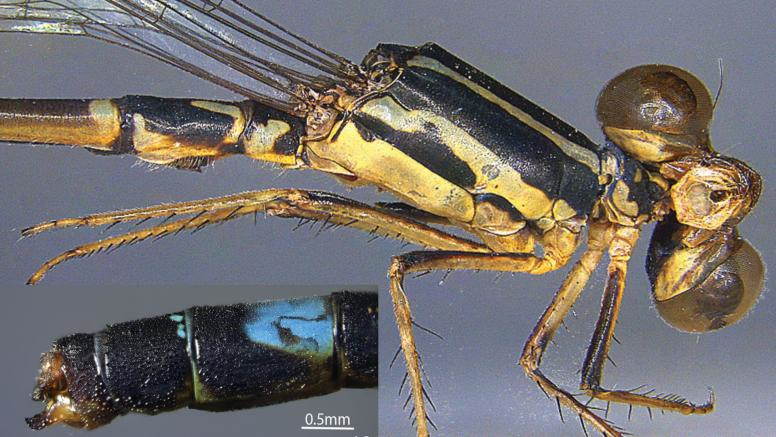
About Mortonagrion santha
• Belongs to the genus Mortonagrion, comprising small and secretive damselflies inhabiting freshwater wetlands and vegetated habitats.
• It differs from its closest known relative, Mortonagrion arthuri, by:
Eechathalakenda incognita: New Fish Species Discovered in Western Ghats
Context: Scientists have discovered a new freshwater fish species, Eechathalakenda incognita, from the Periyar Tiger Reserve, resolving a decades-old taxonomic puzzle.
More on the News
• The species was discovered in streams within the Periyar Tiger Reserve, Kerala, in the Western Ghats.
• It had been mistakenly identified as Eechathalakenda ophicephala for nearly 70 years.
• Detailed morphological and DNA analyses confirmed that the Periyar population represents a distinct species.
• The discovery makes E. incognita the ninth point-endemic fish species known from Periyar Tiger Reserve.
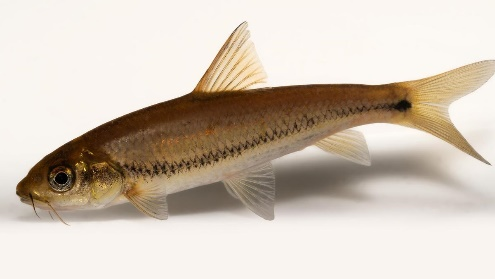
About Eechathalakenda incognita
• E. ophicephala possesses rhomboid-shaped scales.
• E. incognita is distinguished by:
• Both species are narrowly endemic, with E. ophicephala restricted to the upper Pamba River and E. incognita to streams within the Periyar Tiger Reserve.
Bascanichthys chepakakiensis: New Snake Eel Species Discovered
Context: Scientists have discovered a new species of snake eel, Bascanichthys chepakakiensis, from the Bay of Bengal, taking the total number of known species in the genus Bascanichthys to 20.
More on the News
• The specimen was collected from catches landed at Kakinada Fishing Harbour on India's east coast.
• The discovery was made by researchers from the ICAR-National Bureau of Fish Genetic Resources, Kerala University of Fisheries and Ocean Studies, and the Zoological Survey of India.
• The species name combines the Telugu word “chepa” (fish) and “Kaki” (derived from Kakinada), referring to its place of discovery.
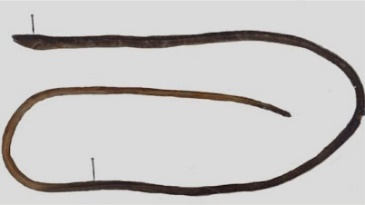
About the Species
• Belongs to the snake eel family (Ophichthidae).
• An extremely long and slender eel with a distinctive bicoloured body.
• Characterised by a shorter snout, unique tooth arrangement, fewer pre-anal vertebrae, and tiny flap-like pectoral fins.
• Differs from its closest known relative, Bascanichthys deraniyagalai, in fin position, tail length, and snout morphology.
ZSI Discovers 2 New Hoverfly Species
Context: Scientists from the Zoological Survey of India (ZSI) have discovered two new species of hoverflies—Eristalinus sapphirinus and Eristalinus brunettii—from the Gangetic Plains of West Bengal.
About the New Species
• Eristalinus sapphirinus is named for its striking sapphire-blue metallic colouration.
• Eristalinus brunettii honours Enrico Adelelmo Brunetti, recognising his pioneering contributions to the study of Indian flies (Diptera).
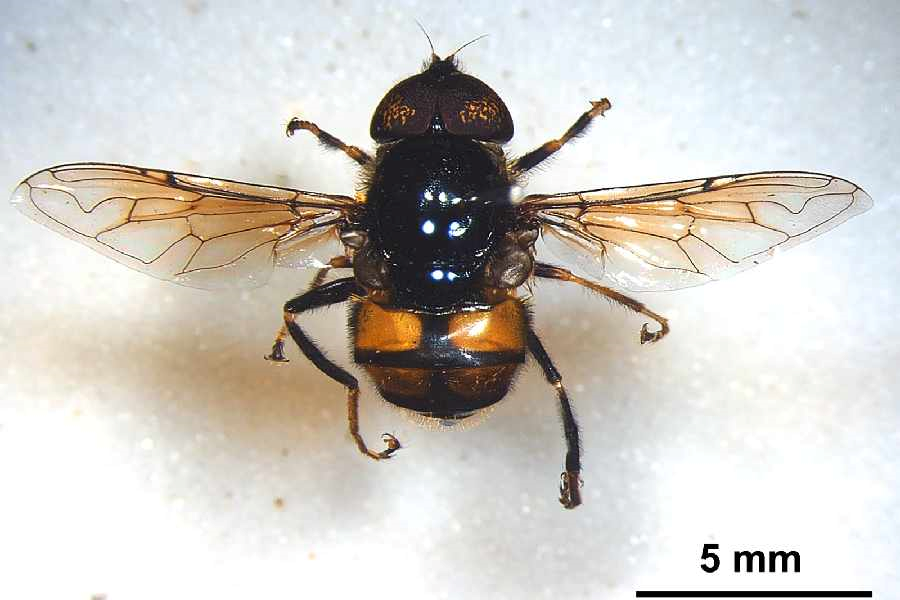
Significance
• The discoveries, published in the European Journal of Taxonomy, represent the first major addition to India's Eristalinus diversity since Brunetti's landmark work in 1923.
• Hoverflies (Family: Syrphidae) are important pollinators and contribute to ecosystem health.
Ecological Role of Hoverflies
• Adult hoverflies help pollinate both wild and cultivated plants.
• Their larvae, known as "rat-tailed maggots", inhabit aquatic environments where they decompose organic matter and recycle nutrients.
Anaphalis sahyadrica: New Plant Species Discovered in the Western Ghats
Context: A new plant species, Anaphalis sahyadrica, belonging to the Asteraceae (sunflower/daisy family), has been discovered in the southern Western Ghats.
More on the News
• The species was found in high-altitude montane grasslands and shola forest margins, including Anamudi and Meesapulimala in Kerala.
• The discovery enriches the known floral diversity of the Western Ghats, one of the world's major biodiversity hotspots.
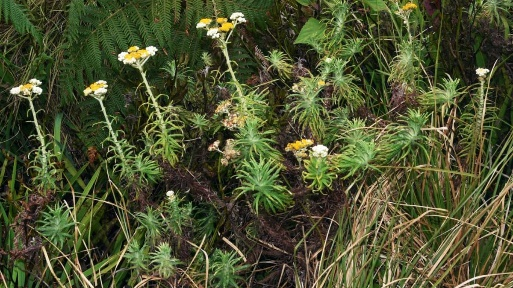
About Anaphalis Sahyadrica
• It is a subshrub that grows at elevations above 2,200 metres above sea level.
• Possesses smooth, hairless leaves with three distinct veins.
• The plant grows up to about one metre in height and produces 90 to 120 white, hemispherical flower heads (capitula).
Khan Global Studies App
With our training programs, learning online can be a very exciting experience. Take the next step toward achieving your professional and personal objectives.



Course Related Query:
Ask Your DoubtsStore Related Query:store@khanglobalstudies.comNEET | JEE | CUET
NCERT Books
Resources
We love learning. Through our innovative solutions, we encourage ourselves, our teams, and our Students to grow. We welcome and look for diverse perspectives and opinions because they enhance our decisions. We strive to understand the big picture and how we contribute to the company’s objectives. We approach challenges with optimism and harness the power of teamwork to accomplish our goals. These aren’t just pretty words to post on the office wall. This is who we are. It’s how we work. And it’s how we approach every interaction with each other and our Students.
Come with an open mind, hungry to learn, and you’ll experience unmatched personal and professional growth, a world of different backgrounds and perspectives, and the freedom to be you—every day. We strive to build and sustain diverse teams and foster a culture of belonging. Creating an inclusive environment where every students feels welcome, appreciated, and heard gives us something to feel (really) good about.