You're all caught up—no notifications available.
Explore All Exams at KGS


All Exams
Explore All Exams at KGS

Khan Sir Courses
Geography I Polity I History | World Map I Indian Map I Economics I Biology

UPSC & State PSC
UPSC I BPSC I UP-PSC I MP-PSC

State Exams
UP I Bihar I MP | Rajasthan

NEET | JEE | CUET
NEET | JEE | CUET

Defence Exams
NDA I CDS I CAPF I AFCAT I SSB I Agniveer

Police Exams
UP SI | Bihar SI | Delhi Police | UP Constable

SSC Exams
CGL I CPO I CHSL I MTS I SSC GD I Delhi Police

Foundation Courses
Physics I Chemistry I Biology I History I Geography I Polity I NCERT I Math I English | Map I Reasoning

Railway Exams
RRB | RPF

Teaching Exams
TET | Teaching | UGC

Banking Exams
SBI | RBI | IBPS

Engineering Exams
Civil | Electrical | Mechanical
UGC NET
UGC NET/JRF
Current Affairs provides you with the best compilation of the Daily Current Affairs taking place across the globe: National, International, Sports, Science and Technology, Banking, Economy, Agreement, Appointments, Ranks, and Report and General Studies

SYLLABUS
GS-3: Conservation, environmental pollution and degradation; Conservation, environmental pollution and degradation.
Context: More than 200 organisations worldwide have written an open letter to the board of the Fund for Responding to Loss and Damage (FRLD), warning that without urgent financial contributions, the fund may soon run dry.
About the Fund for Responding to Loss and Damage (FRLD)
• The FRLD is an operating entity under the financial mechanism of the United Nations Framework Convention on Climate Change (UNFCCC), created to support developing countries facing irreversible impacts of climate change.
• It was established during COP27 and operationalised at COP28, marking a major milestone after decades of demand from vulnerable nations.
• The Fund addresses both economic losses (such as infrastructure damage and livelihood loss) and non-economic losses (including biodiversity loss, cultural heritage erosion, and displacement).
• It functions under the guidance of the Conference of the Parties (COP) and the Meeting of the Parties to the Paris Agreement (CMA).
• A key operational step has been the launch of its first funding calls under the Barbados Implementation Modalities (BIM) during 2025–26, enabling grant-based, country-led projects.
Significance of the Fund
• Climate Justice Recognition: The FRLD represents a landmark in climate justice by acknowledging the disproportionate burden borne by developing and least-developed countries despite their minimal contribution to global emissions.
• Dedicated Financial Mechanism: It provides a dedicated financial mechanism to address “loss and damage”—including sea-level rise, extreme weather events, heatwaves, and desertification.
• Bridging Adaptation Gaps: The Fund bridges the gap between adaptation limits and real-world climate impacts through support that is expected to be grant-based, non-debt creating, and predictable.
• Legal and Moral Responsibility: It reflects evolving global recognition of legal and moral responsibility, reinforced by interpretations such as the climate advisory opinion of the International Court of Justice.
Challenges Faced by the Fund
• Severe Funding Gap: Total pledges stand at about $822 million, with around $448 million disbursed—less than 0.1% of the estimated $400 billion annual requirement.
• Risk of Fund Depletion: Without new contributions, the Fund risks running out of resources by 2027.
• Rising Financial Needs: Developing countries may require over $724 billion annually by 2030, with actual needs likely higher due to worsening climate impacts and inflation.
• Slow Commitments by Developed Countries: Delays in fulfilling financial commitments undermine trust and effectiveness.
• Limited Initial Allocation: The initial $250 million funding envelope under the start-up phase is grossly inadequate.
• Governance and Equity Concerns: There are calls for a human rights-based, inclusive, and equitable resource mobilisation strategy.
Proposed Financial Mechanisms
• Justice-Oriented Global Taxes and Levies:
o Climate damage tax on fossil fuel extraction and production.
o Windfall taxes or permanent levies on fossil fuel corporation profits.
o Financial transaction taxes to mobilise global capital flows.
o Levies on luxury aviation and premium frequent flyers.
o Maritime shipping levies with a dedicated share for the Fund.
• Redistribution and Wealth-Based Measures:
o Wealth taxes targeting ultra-rich individuals.
o Redirecting fossil fuel subsidies towards climate finance.
o Reallocation of public spending, including portions of military expenditure.
• Systemic Financial Reforms: Measures to curb global tax evasion and avoidance.
• Incremental Financing Roadmap:
o At least $50 billion annually by 2027.
o Scaling to $100 billion annually by 2031.
o Reaching $400 billion annually by 2035.
Implications for India
• India is among the most climate-vulnerable countries due to its diverse geography, including the Himalayan ecosystem and a coastline exceeding 11,000 km.
• States such as Assam, Bihar, West Bengal, Andhra Pradesh, Maharashtra, and Karnataka face risks from floods, droughts, and cyclones.
• 27 out of 35 States/UTs are exposed to high hydro-meteorological disaster risks.
• Importance of FRLD Funding for India:
o Address climate-induced disasters and economic losses.
o Support vulnerable communities and livelihoods.
o Invest in resilient infrastructure and recovery systems.
o Reduce dependence on debt-based climate finance.
• Risks of Inadequate Funding: Insufficient FRLD resources could constrain India’s ability to respond effectively to escalating climate impacts, especially in disaster-prone and economically weaker regions.
Source:
Downtoearth
Frld
Fiftrustee
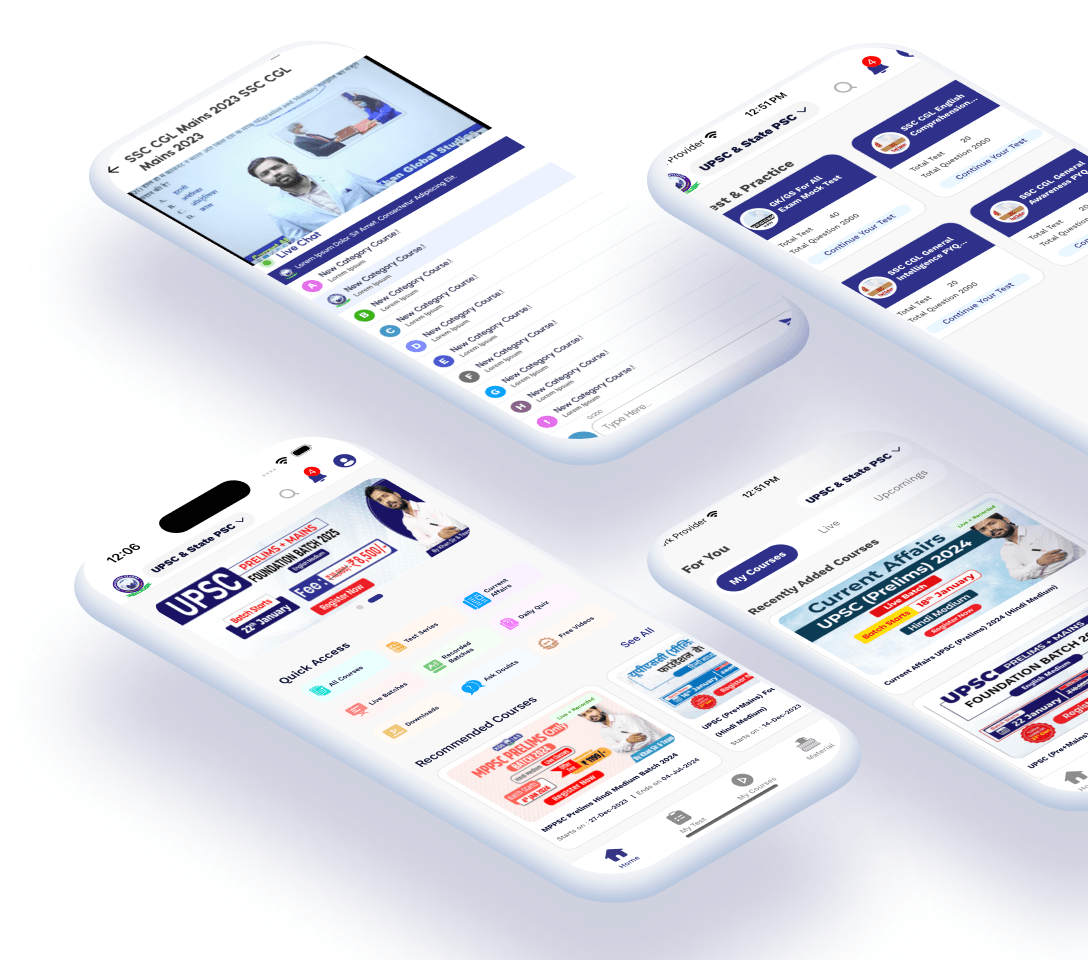
The most trusted learning platform on your phone
With our training programs, learning online can be a very exciting experience! Take the next step toward achieving your professional and personal objectives



Course Related Query:
Ask Your DoubtsStore Related Query:store@khanglobalstudies.comNCERT Books
Resources
We love learning. Through our innovative solutions, we encourage ourselves, our teams, and our Students to grow. We welcome and look for diverse perspectives and opinions because they enhance our decisions. We strive to understand the big picture and how we contribute to the company’s objectives. We approach challenges with optimism and harness the power of teamwork to accomplish our goals. These aren’t just pretty words to post on the office wall. This is who we are. It’s how we work. And it’s how we approach every interaction with each other and our Students.
Come with an open mind, hungry to learn, and you’ll experience unmatched personal and professional growth, a world of different backgrounds and perspectives, and the freedom to be you—every day. We strive to build and sustain diverse teams and foster a culture of belonging. Creating an inclusive environment where every students feels welcome, appreciated, and heard gives us something to feel (really) good about.
Get Free academic Counseling & Course Details