You're all caught up—no notifications available.
Explore All Exams at KGS


All Exams
Explore All Exams at KGS

Khan Sir Courses
Geography I Polity I History | World Map I Indian Map I Economics I Biology

UPSC & State PSC
UPSC I BPSC I UP-PSC I MP-PSC

State Exams
UP I Bihar I MP | Rajasthan

NEET | JEE | CUET
NEET | JEE | CUET

Defence Exams
NDA I CDS I CAPF I AFCAT I SSB I Agniveer

Police Exams
UP SI | Bihar SI | Delhi Police | UP Constable

SSC Exams
CGL I CPO I CHSL I MTS I SSC GD I Delhi Police

Foundation Courses
Physics I Chemistry I Biology I History I Geography I Polity I NCERT I Math I English | Map I Reasoning

Railway Exams
RRB | RPF

Teaching Exams
TET | Teaching | UGC

Banking Exams
SBI | RBI | IBPS

Engineering Exams
Civil | Electrical | Mechanical
UGC NET
UGC NET/JRF
Current Affairs provides you with the best compilation of the Daily Current Affairs taking place across the globe: National, International, Sports, Science and Technology, Banking, Economy, Agreement, Appointments, Ranks, and Report and General Studies

SYLLABUS
GS-2: Effect of policies and politics of developed and developing countries on India’s interests, Indian diaspora. Important International institutions, agencies, and fora- their structure, mandate. Issues relating to development and management of Social Sector/Services relating to Health, Education, Human Resources.
GS-3: Indian Economy and issues relating to planning, mobilization of resources, growth, development and employment.
Context: According to the UNDP report, the conflict and military escalation in West Asia threatens to push 2.5 million people in India into poverty, and the country is projected to experience some loss in its human development progress.
About the Report
• The findings are based on the UNDP report titled “Military Escalation in the Middle East: Human Development Impacts Across Asia and the Pacific.”
• The report assesses impacts across 36 countries, drawing from 22 UNDP country offices, CGE simulations, and external analytical inputs.
• It considers a 28-day conflict scenario with extended adjustment (up to 8 months) to estimate economic and human development impacts.
• It highlights that the crisis is not just a geopolitical issue but a human development shock, transmitted through rising fuel prices, increased freight and insurance costs, supply chain disruptions and higher input costs.
• These factors collectively reduce purchasing power, increase food insecurity, strain public finances, and weaken livelihoods.
Key Findings of the Report
Rising Poverty and Economic Losses:
• Globally, poverty could increase from 1.9 million to 8.8 million people across scenarios.
• South Asia bears the largest burden, with 1.7 million to over 8 million people pushed into poverty.
• Asia-Pacific could face economic losses between $97 billion and $299 billion (0.3–0.8% of GDP).
• India-Specific Impact:
• China may see a moderate increase (115,000 to 620,000 people) due to smaller proportional shocks.
Human Development Setbacks (HDI Impact):
• The UNDP simulation estimates the impact of the conflict on the Human Development Index (HDI) for countries across the region.
• Iran's HDI could decline by an amount equivalent to roughly one to one and a half years of human development progress.
• India is projected to experience a loss of approximately 0.03–0.12 years of HDI progress.
• Nepal is projected at around 0.02–0.09 years and Vietnam at 0.02–0.07 years.
• For China, the estimated effects on HDI remain limited in magnitude, ranging roughly 0.01–0.05 years.
Economic and Output Losses:
• Output losses in Asia-Pacific could range from roughly US$97 billion to US$299 billion, equivalent to 0.3 to 0.8 percent of regional GDP.
• South Asia accounts for the largest losses in both absolute and relative terms.
• East Asia registers sizeable absolute losses but modest proportional declines.
Transmission Channels:
• The shock is affecting people through multiple and reinforcing channels.
• Energy is the dominant transmission pathway, with 33 out of 36 countries reporting high vulnerability to oil-price shocks.
• Over 80 percent of crude and liquefied natural gas transiting the Strait of Hormuz is destined for Asian markets.
• Rising living costs are squeezing poor and near-poor households.
• Food and fertilizer price increases, hitting ahead of key planting cycles, threaten to deepen food insecurity.
India’s External Dependence:
• India meets more than 90% of its oil needs through imports.
• More than 40% of crude imports and 90% of LPG imports come from West Asia.
• West Asian countries supply more than 45% of India’s fertilizer imports.
• 85% of the country’s domestic urea production depends on imported regasified liquefied natural gas.
• West Asian markets account for 14% of exports and 20.9% of imports.
• Roughly $48 billion in non-oil exports include basmati rice, tea, gems and jewellery, and apparel.
Food Security and Agriculture Risks:
• Food security pressures could be compounded by remittance losses.
• Reduced Gulf economic activity weakens household incomes and purchasing power.
• In India, the timing is especially sensitive as disruptions coincide with preparations for the Kharif season.
• Urea stocks stood at 6.114 million tonnes, providing a near-term buffer but not fully insulating the sector.
Remittances and Migration:
• India has the largest absolute exposure to Gulf labour markets.
• 9.37 million Indians were residing in Gulf Cooperation Council countries as of October 2024.
• They send about 38–40% of India’s inward remittances.
• The scale of direct exposure to Gulf labour markets and remittance flows is both substantial and consequential.
Employment and MSME Impact:
• Employment risks are high, especially in MSME-intensive sectors:
Sectoral Cost Pressures:
• Medical devices: Raw material costs may rise by ~50%.
• Medicines: Wholesale prices already up by 10–15%.
• Rising LNG prices have pushed countries (including India) toward coal-based power.
Government Response and Constraints:
• Countries have adopted short-term measures such as subsidies and tax relief, supply management and demand reduction, and monetary and financial interventions.
• However, these measures increase fiscal pressure and highlight the limited policy space in many economies.
• They also create long-term trade-offs between price stability, social protection, and public investment.
UNDP report highlights four major Policy Priorities:
• Strengthen shock-responsive social protection so that support can be targeted, scaled, and delivered quickly.
• Protect livelihoods and firm-level resilience, especially for MSMEs and informal workers.
• Reduce structural exposure to external shocks through resilient energy, food, and employment systems.
• Deepen regional cooperation across energy, trade, food, and labour mobility systems.

India’s Stand on UNSC Reform
Operational Guidelines Launched for Urban Challenge Fund (UCF)
UNDP Report on the Impact of West Asia Military Escalation
India’s Stand on UNSC Reform
Operational Guidelines Launched for Urban Challenge Fund (UCF)
UNDP Report on the Impact of West Asia Military Escalation
NISER Study Reveals Strong Link Between Climate Variability and Poverty in India
e-NAM Completes 10 Years: Digital Revolution in India’s Agricultural Marketing
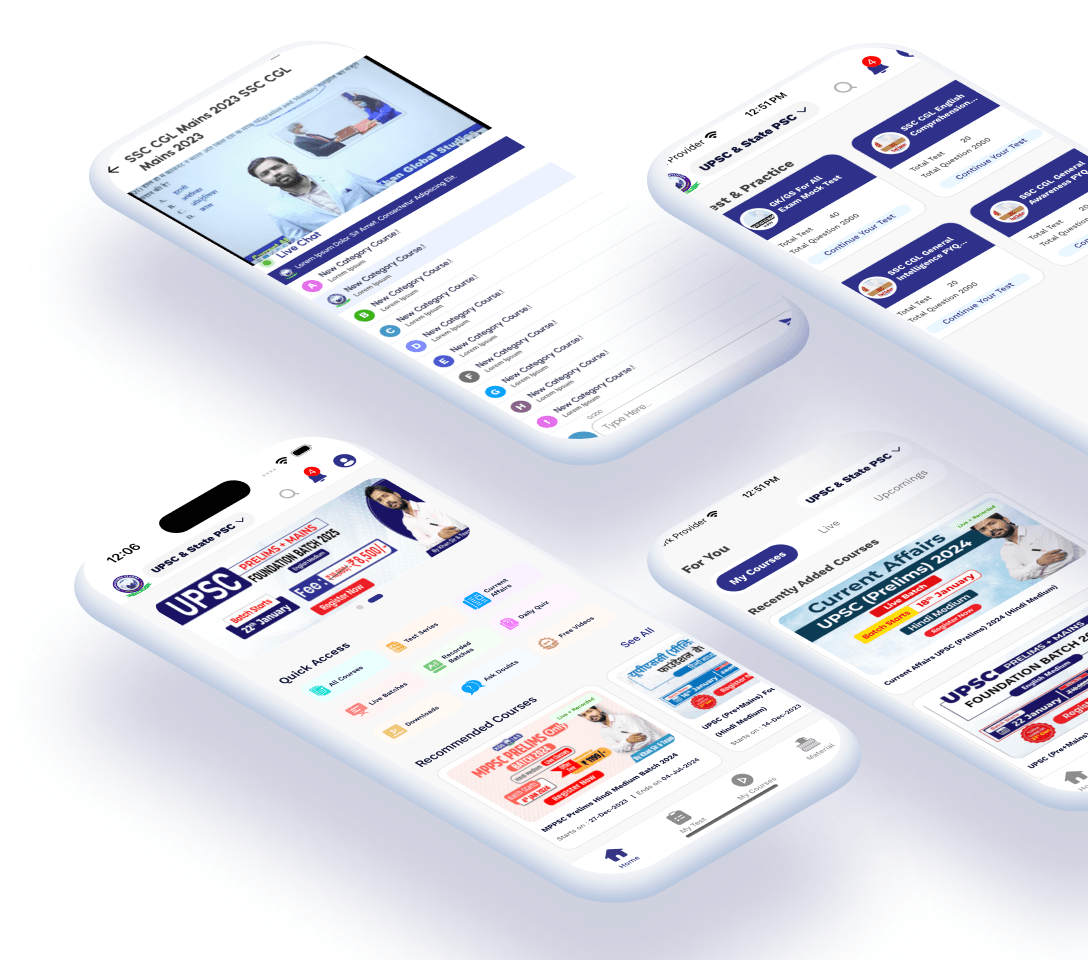
The most trusted learning platform on your phone
With our training programs, learning online can be a very exciting experience! Take the next step toward achieving your professional and personal objectives


Course Related Query:
Ask Your DoubtsStore Related Query:store@khanglobalstudies.comNCERT Books
Resources
We love learning. Through our innovative solutions, we encourage ourselves, our teams, and our Students to grow. We welcome and look for diverse perspectives and opinions because they enhance our decisions. We strive to understand the big picture and how we contribute to the company’s objectives. We approach challenges with optimism and harness the power of teamwork to accomplish our goals. These aren’t just pretty words to post on the office wall. This is who we are. It’s how we work. And it’s how we approach every interaction with each other and our Students.
Come with an open mind, hungry to learn, and you’ll experience unmatched personal and professional growth, a world of different backgrounds and perspectives, and the freedom to be you—every day. We strive to build and sustain diverse teams and foster a culture of belonging. Creating an inclusive environment where every students feels welcome, appreciated, and heard gives us something to feel (really) good about.
Get Free academic Counseling & Course Details