You're all caught up—no notifications available.
Explore All Exams at KGS


All Exams
Explore All Exams at KGS

Khan Sir Courses
Geography I Polity I History | World Map I Indian Map I Economics I Biology

UPSC & State PSC
UPSC I BPSC I UP-PSC I MP-PSC

State Exams
UP I Bihar I MP | Rajasthan

NEET | JEE | CUET | Boards
NEET | JEE | CUET | Boards

Defence Exams
NDA I CDS I CAPF I AFCAT I SSB I Agniveer

Police Exams
UP SI | Bihar SI | Delhi Police | UP Constable

SSC Exams
CGL I CPO I CHSL I MTS I SSC GD I Delhi Police

Foundation Courses
Physics I Chemistry I Biology I History I Geography I Polity I NCERT I Math I English | Map I Reasoning

Railway Exams
RRB | RPF

Teaching Exams
TET | Teaching | UGC

Banking Exams
SBI | RBI | IBPS

Engineering Exams
Civil | Electrical | Mechanical
UGC NET
UGC NET/JRF
Current Affairs provides you with the best compilation of the Daily Current Affairs taking place across the globe: National, International, Sports, Science and Technology, Banking, Economy, Agreement, Appointments, Ranks, and Report and General Studies

SYLLABUS
GS-3: Infrastructure: Energy; Environmental Pollution and Degradation.
Context: According to a new SFC–TERI report, India’s freight sector could see carbon dioxide emissions surge by nearly 400% by 2047 if left unchecked, underscoring the urgent need for institutionalised emissions accounting and policy integration.
More on the News
• The whitepaper, titled Institutionalising Freight Emissions Accounting in India: Pathways for Clean Freight Programs and Policy Integration, has been released by Smart Freight Centre (SFC) India in collaboration with The Energy and Resources Institute (TERI) and IIM-Bangalore.
• The report argues that India’s current freight emissions measurement is fragmented and non standardised, undermining both corporate disclosure and policy design.
• It calls for a nationally harmonised accounting framework as the foundation for decarbonisation.
• The issue is closely linked to India’s broader commitments toward sustainable logistics transformation and Net-Zero emissions by 2070, making freight decarbonisation a strategic priority.
Key Highlights of the Report
• Projected Emissions Surge: Without intervention, freight-related CO₂ emissions may increase fourfold by 2047, driven mainly by rising freight volumes, continued dependence on diesel-based road transport, and fragmented and inefficient logistics systems.
• Measurement Gap: The whitepaper identifies measurement gaps as the core barrier to decarbonization, as companies use different methods, emission factors and system boundaries, making company level freight emissions data difficult to compare and aggregate.
• Need for Institutionalised Emissions Accounting:
• Institutional and Policy Integration: The report stresses embedding emissions accounting within the National Logistics Policy, PM Gati Shakti infrastructure initiative, and broader clean-freight and carbon-market readiness strategies.
• Implementation Challenges:
Significance of the Report
• Foundation for Freight Decarbonisation: The report reframes emissions accounting as infrastructure for climate action, not merely a reporting requirement, enabling performance benchmarking, targeted policies and clean freight programmes.
• Support to Net Zero: Given India’s 2070 Net Zero goal and the projected tripling of freight demand by mid century, building this measurement backbone now is presented as essential to avoid locking in high-carbon logistics systems.
• Alignment with Global Markets and Standards: By aligning with ISO 14083 and GLEC, the framework is designed to make Indian logistics compatible with global clean freight programmes, strengthening Indian exporters’ positions as carbon disclosure norms tighten worldwide.
• Strategic Boost to Logistics Competitiveness: Integrating emissions metrics into logistics planning can drive efficiency improvements—optimised routing, higher load factors, and modal diversification—that lower both costs and emissions.
• Air Quality and Public Health Co-Benefits: The report notes that reducing freight emissions can also cut local air pollutants, delivering Improved urban air quality and lower health burdens.
SOURCES
Down To Earth
TERIIN
TERIIN
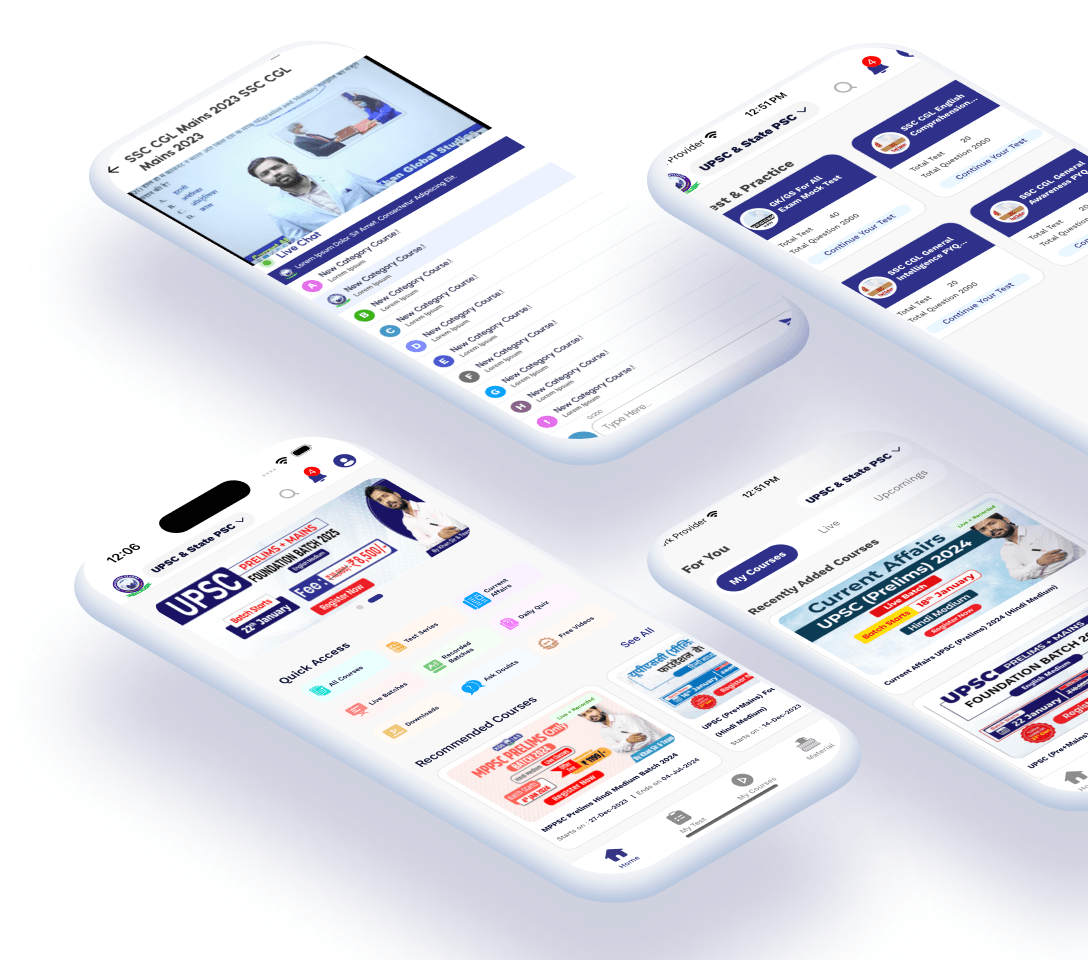
The most trusted learning platform on your phone
With our training programs, learning online can be a very exciting experience! Take the next step toward achieving your professional and personal objectives


NCERT Books
Resources
We love learning. Through our innovative solutions, we encourage ourselves, our teams, and our Students to grow. We welcome and look for diverse perspectives and opinions because they enhance our decisions. We strive to understand the big picture and how we contribute to the company’s objectives. We approach challenges with optimism and harness the power of teamwork to accomplish our goals. These aren’t just pretty words to post on the office wall. This is who we are. It’s how we work. And it’s how we approach every interaction with each other and our Students.
Come with an open mind, hungry to learn, and you’ll experience unmatched personal and professional growth, a world of different backgrounds and perspectives, and the freedom to be you—every day. We strive to build and sustain diverse teams and foster a culture of belonging. Creating an inclusive environment where every students feels welcome, appreciated, and heard gives us something to feel (really) good about.
Get Free academic Counseling & Course Details