You're all caught up—no notifications available.
Explore All Exams at KGS


All Exams
Explore All Exams at KGS

Khan Sir Courses
Geography I Polity I History | World Map I Indian Map I Economics I Biology

UPSC & State PSC
UPSC I BPSC I UP-PSC I MP-PSC

State Exams
UP I Bihar I MP | Rajasthan

NEET | JEE | CUET | Boards
NEET | JEE | CUET | Boards

Defence Exams
NDA I CDS I CAPF I AFCAT I SSB I Agniveer

Police Exams
UP SI | Bihar SI | Delhi Police | UP Constable

SSC Exams
CGL I CPO I CHSL I MTS I SSC GD I Delhi Police

Foundation Courses
Physics I Chemistry I Biology I History I Geography I Polity I NCERT I Math I English | Map I Reasoning

Railway Exams
RRB | RPF

Teaching Exams
TET | Teaching | UGC

Banking Exams
SBI | RBI | IBPS

Engineering Exams
Civil | Electrical | Mechanical
UGC NET
UGC NET/JRF
Current Affairs provides you with the best compilation of the Daily Current Affairs taking place across the globe: National, International, Sports, Science and Technology, Banking, Economy, Agreement, Appointments, Ranks, and Report and General Studies

SYLLABUS
GS-3: Indian Economy and issues relating to planning, mobilization, of resources, growth, development and employment.
Context: Recently, the Governments of India and France signed a protocol to amend the India–France Double Taxation Avoidance Convention, aligning it with evolving international tax standards to boost investment and ensure tax certainty.
More on the News
• The protocol was signed during the visit of the French President to India, reflecting strengthened bilateral economic cooperation.
• The original India–France Double Taxation Avoidance Convention (DTAC) was signed on 29 September 1992 and came into force on 1 August 1994.
• The newly signed protocol updates the treaty framework in line with contemporary international tax norms.
Key Highlights of the Amendment to the India–France DTAC
• Most-Favoured-Nation (MFN) Clause Deletion: The MFN clause has been officially removed.
• Capital Gains Taxation: The Amending Protocol provides full taxing rights in respect of capital gains from the sale of company shares to the source country (where the company is resident).
• Taxation of Dividends: Replaces the single 10% rate with a split-rate structure.
• Modification of ‘Fees for Technical Services’ (FTS) Definition: Aligns the definition of FTS with the provisions of the India–US Double Taxation Avoidance Agreement.
• Expansion of Permanent Establishment (PE) Scope
• Updated Exchange of Information Provisions
• New Article on Assistance in Collection of Taxes: A new article on assistance in collection of taxes enables each country to help the other in recovering tax claims, thereby strengthening cross-border enforcement and compliance.
• Incorporation of BEPS Multilateral Instrument (MLI) Provisions: Integrates applicable provisions of the BEPS MLI into the DTAC.
Significance of the India-France Double Taxation Avoidance Convention (DTAC)
• Source-Based Taxation: By allocating capital gains taxation on shares to the company’s state of residence, the protocol firmly secures India’s taxing rights over gains from shares of Indian companies held by French investors, curbing treaty shopping opportunities.
• Removal of Ambiguity: By deleting the MFN clause, it eliminates long-standing legal disputes regarding whether lower rates from other OECD treaties could be "imported" into the India–France agreement.
• Digital & Service Modernisation: The introduction of Service PE and India–US style FTS language modernises the treaty for service and knowledge-intensive business models, aligning it with India’s newer treaty practice and international norms.
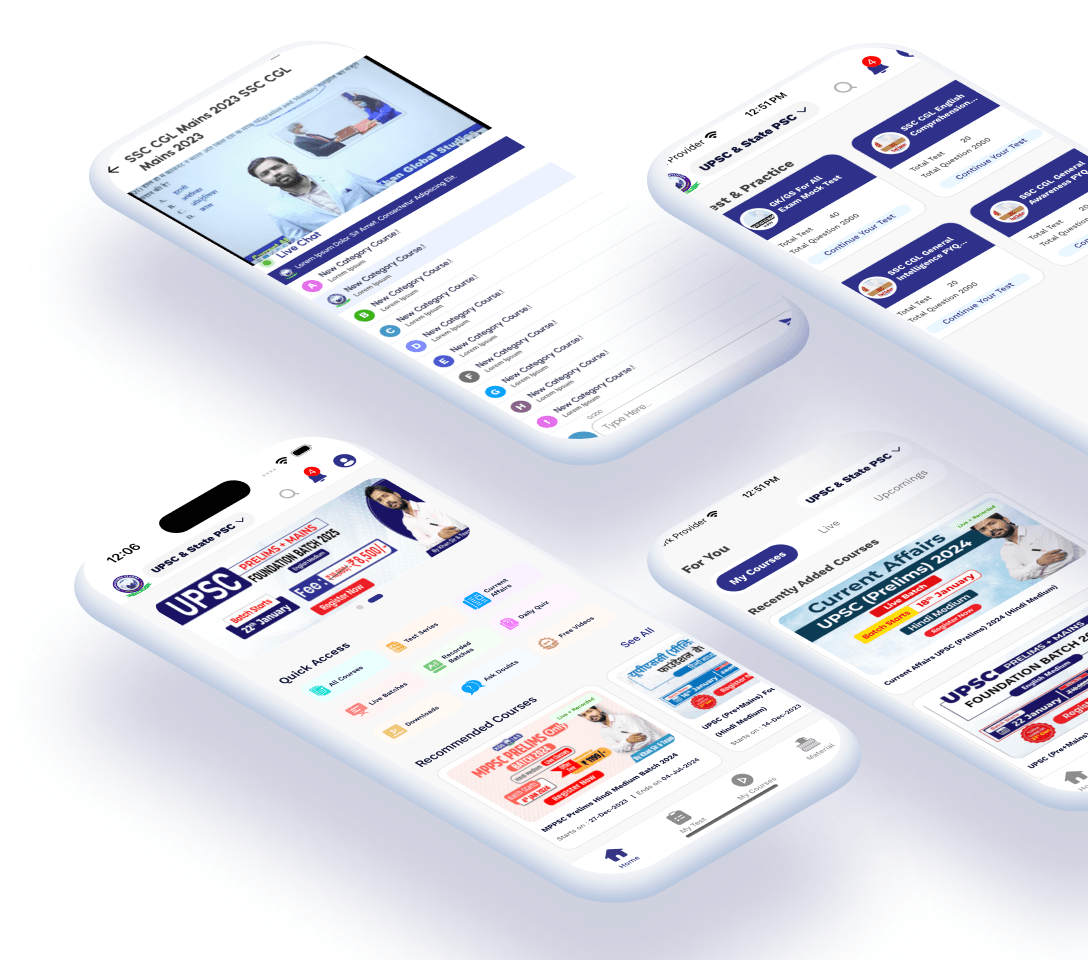
The most trusted learning platform on your phone
With our training programs, learning online can be a very exciting experience! Take the next step toward achieving your professional and personal objectives



Course Related Query:
Ask Your DoubtsStore Related Query:store@khanglobalstudies.comNCERT Books
Resources
We love learning. Through our innovative solutions, we encourage ourselves, our teams, and our Students to grow. We welcome and look for diverse perspectives and opinions because they enhance our decisions. We strive to understand the big picture and how we contribute to the company’s objectives. We approach challenges with optimism and harness the power of teamwork to accomplish our goals. These aren’t just pretty words to post on the office wall. This is who we are. It’s how we work. And it’s how we approach every interaction with each other and our Students.
Come with an open mind, hungry to learn, and you’ll experience unmatched personal and professional growth, a world of different backgrounds and perspectives, and the freedom to be you—every day. We strive to build and sustain diverse teams and foster a culture of belonging. Creating an inclusive environment where every students feels welcome, appreciated, and heard gives us something to feel (really) good about.
Get Free academic Counseling & Course Details