You're all caught up—no notifications available.
Explore All Exams at KGS


All Exams
Explore All Exams at KGS

Khan Sir Courses
Geography I Polity I History | World Map I Indian Map I Economics I Biology

UPSC & State PSC
UPSC I BPSC I UP-PSC I MP-PSC

State Exams
UP I Bihar I MP | Rajasthan

NEET | JEE | CUET
NEET | JEE | CUET

Defence Exams
NDA I CDS I CAPF I AFCAT I SSB I Agniveer

Police Exams
UP SI | Bihar SI | Delhi Police | UP Constable

SSC Exams
CGL I CPO I CHSL I MTS I SSC GD I Delhi Police

Foundation Courses
Physics I Chemistry I Biology I History I Geography I Polity I NCERT I Math I English | Map I Reasoning

Railway Exams
RRB | RPF

Teaching Exams
TET | Teaching | UGC

Banking Exams
SBI | RBI | IBPS

Engineering Exams
Civil | Electrical | Mechanical
UGC NET
UGC NET/JRF
Current Affairs provides you with the best compilation of the Daily Current Affairs taking place across the globe: National, International, Sports, Science and Technology, Banking, Economy, Agreement, Appointments, Ranks, and Report and General Studies

SYLLABUS
GS-3: Conservation, Environmental Pollution and Degradation.
Context: The first global conference focused exclusively on transitioning away from fossil fuels was held in Santa Marta, Colombia, co-hosted by Colombia and the Netherlands.
More on the News
• The Conference saw around 57 countries – representing about one-third of the world’s economy – debate practical ways to move away from coal, oil and gas.
• The conference builds upon the momentum created at COP28 (Dubai, 2023), where countries for the first time agreed to “transition away from fossil fuels” in energy systems.
• It reflects a decisive shift in global climate discourse from norm-setting to implementation, particularly in the context of achieving the 1.5°C target under the Paris Agreement.
• At the summit’s conclusion, Tuvalu and Ireland were announced as the co-hosts of the second conference on transitioning away from fossil fuels, which will take place in the Pacific island nation in 2027.
Key Outcomes of the Conference
• Operationalising Fossil Fuel Phase-Down: A coalition of 57 countries agreed on an action-oriented roadmap to operationalise fossil fuel phase-down, marking a clear shift from target-setting to implementation of commitments made under the Paris Agreement.
• Launch of Implementation Workstreams: Three key implementation workstreams were launched to translate commitments into action:
• Fossil Fuel Non-Proliferation Treaty (FFNPT) Debate: The conference saw renewed debate on the FFNPT, which aims to end new fossil fuel expansion, manage a fair phase out, and support a just transition, gaining stronger backing from climate vulnerable nations.
• Country-Level Announcements and Policy Signals: At the conference, several countries signalled concrete fossil fuel phase out roadmaps, including –
• Science-led transition: A Science Panel for the Global Energy Transition was launched to guide countries with evidence-based pathways aligned with the 1.5°C target and help dismantle legal, financial and political barriers to implementation.
Significance for Global Climate Governance
• From Commitments to Implementation: The conference marks a shift from declaratory climate pledges to actionable strategies, focusing on “how” rather than “whether” to phase out fossil fuels.
• Emergence of a Parallel Climate Platform: It represents the rise of a flexible, coalition-based approach to climate action, complementing the UNFCCC process and enabling faster progress among willing countries.
• Advancing Just Transition Principles: By emphasising equity, financing, and social protection, the conference strengthens the global focus on a just and inclusive energy transition.
• Policy Innovation and Global Coordination: The launch of workstreams and national roadmaps encourages policy innovation, knowledge sharing, and coordinated global action.
Challenges and Way Ahead
• The absence or limited engagement of major emitters such as the United States, China, and India reduces the overall impact of the initiative.
• Developing countries continue to face challenges related to climate finance, technology access, and debt burdens, which hinder their transition efforts.
• The conference lacks legally binding enforcement mechanisms, raising concerns about the effectiveness of implementation.
• There is a pressing need to mobilise large-scale climate finance, strengthen international cooperation, and develop clear, time-bound national transition strategies aligned with global climate goals.
• Future platforms, including the 2027 conference, should work toward stronger global coordination while ensuring just transition policies such as reskilling, social protection, and inclusive development.
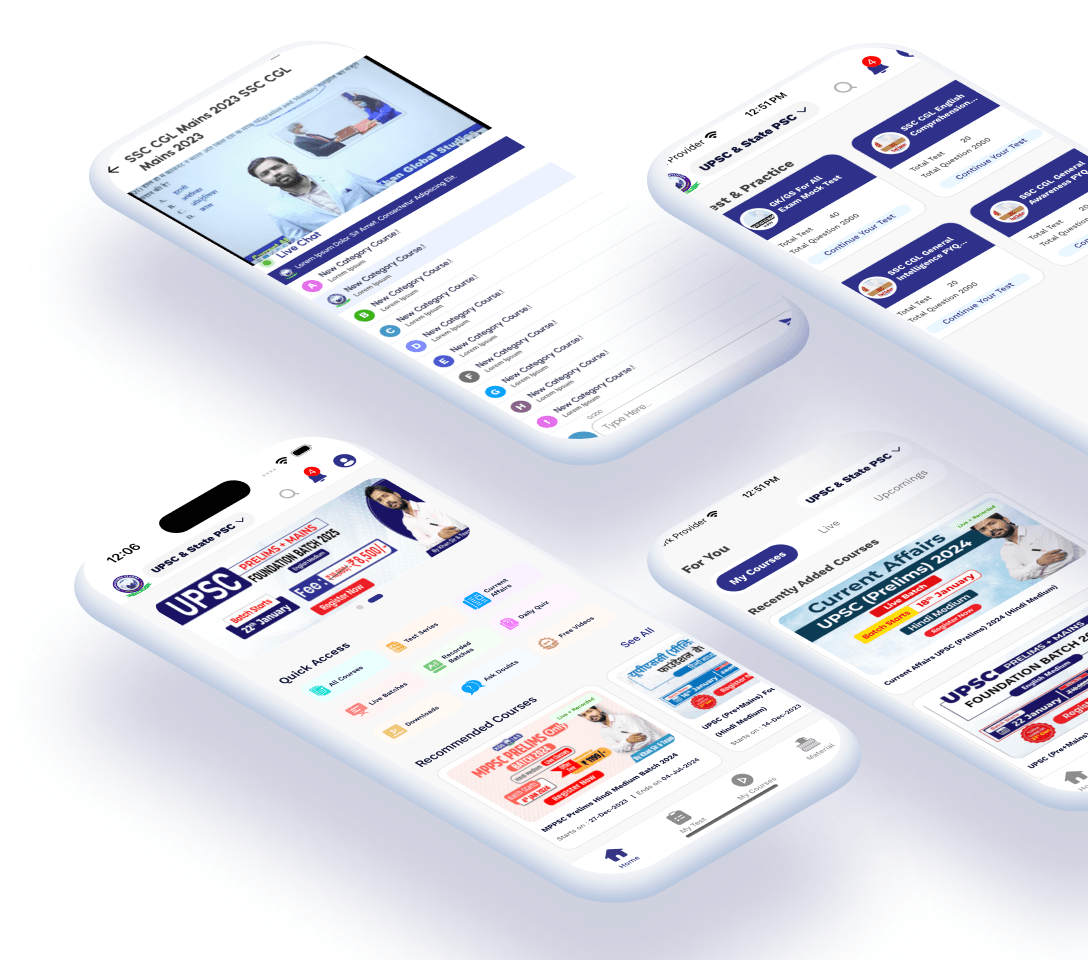
The most trusted learning platform on your phone
With our training programs, learning online can be a very exciting experience! Take the next step toward achieving your professional and personal objectives


Course Related Query:
Ask Your DoubtsStore Related Query:store@khanglobalstudies.comNCERT Books
Resources
We love learning. Through our innovative solutions, we encourage ourselves, our teams, and our Students to grow. We welcome and look for diverse perspectives and opinions because they enhance our decisions. We strive to understand the big picture and how we contribute to the company’s objectives. We approach challenges with optimism and harness the power of teamwork to accomplish our goals. These aren’t just pretty words to post on the office wall. This is who we are. It’s how we work. And it’s how we approach every interaction with each other and our Students.
Come with an open mind, hungry to learn, and you’ll experience unmatched personal and professional growth, a world of different backgrounds and perspectives, and the freedom to be you—every day. We strive to build and sustain diverse teams and foster a culture of belonging. Creating an inclusive environment where every students feels welcome, appreciated, and heard gives us something to feel (really) good about.
Get Free academic Counseling & Course Details