Explore All Exams at KGS


All Exams
Explore All Exams at KGS

Khan Sir Courses
Geography I Polity I History | World Map I Indian Map I Economics I Biology

UPSC & State PSC
UPSC I BPSC I UP-PSC I MP-PSC

State Exams
UP I Bihar I MP | Rajasthan

NEET | JEE | CUET
NEET | JEE | CUET

Defence Exams
NDA I CDS I CAPF I AFCAT I SSB I Agniveer

Police Exams
UP SI | Bihar SI | Delhi Police | UP Constable

SSC Exams
CGL I CPO I CHSL I MTS I SSC GD I Delhi Police

Foundation Courses
Physics I Chemistry I Biology I History I Geography I Polity I NCERT I Math I English | Map I Reasoning

Railway Exams
RRB | RPF

Teaching Exams
TET | Teaching | UGC

Banking Exams
SBI | RBI | IBPS

Engineering Exams
Civil | Electrical | Mechanical
UGC NET
UGC NET/JRF
Current Affairs provides you with the best compilation of the Daily Current Affairs taking place across the globe: National, International, Sports, Science and Technology, Banking, Economy, Agreement, Appointments, Ranks, and Report and General Studies
Current Affairs
SYLLABUS
GS-3: Science and Technology- Developments and their Applications and Effects in Everyday Life;Awareness in the fields of Bio-technology.
Context: Bhutan has become the first country in the WHO South-East Asia Region to achieve WHO validation for eliminating dog-transmitted human rabies as a public health problem.
More on the News:
• The achievement, validated by the WHO on 4 September 2026, reflects more than a decade of sustained investment in One Health, mass dog vaccination, dog population management, integrated surveillance and universal access to post-exposure prophylaxis (PEP).
• 2018 WHO Expert Consultation on Rabies established the criteria for validation of elimination of dog-mediated human rabies as a public health problem, requiring absence of human deaths for at least two years.
• The Global Strategic Plan to End Human Deaths from Dog-Mediated Rabies by 2030 (Zero by 30) is a joint initiative of WHO, WOAH and the Food and Agriculture Organization of the United Nations (FAO), in collaboration with the Global Alliance for Rabies Control (GARC).
About Rabies
• Rabies is a zoonotic viral disease caused by the Rabies virus, a Ribonucleic Acid (RNA) virus of the Lyssavirus genus under the Rhabdoviridae family, and is transmitted through the saliva of infected animals such as dogs, cats and monkeys.
• Rabies is a neglected tropical disease and a serious public health problem in over 150 countries and territories, mainly in Asia and Africa, causing tens of thousands of deaths annually.
• Transmission: Rabies spreads through the saliva of infected animals, mainly through bites and scratches or contact with broken skin or mucous membranes.
• Symptoms and Incubation Period: Early symptoms include fever, pain, and unusual tingling, pricking or burning sensations (paraesthesia) at the wound site. In later stages, the virus spreads to the central nervous system, causing fatal inflammation of the brain and spinal cord. The incubation period ranges from 1 week to 1 year, typically 2–3 months.
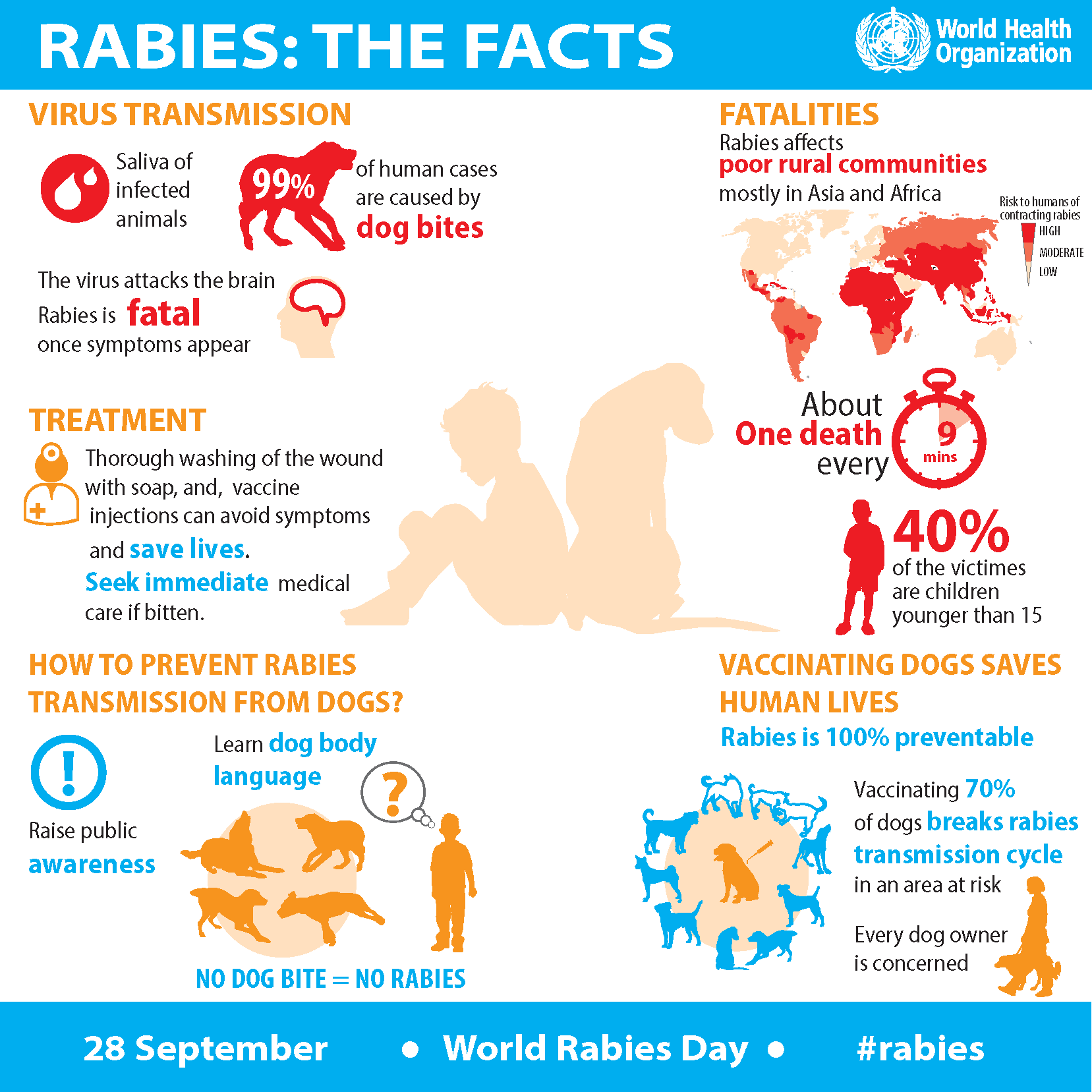
• Rabies Prevention : Dog vaccination is the most cost-effective strategy; human vaccines are available for pre-exposure immunization.
Indian Government Initiatives:
• National Rabies Control Programme (NRCP):
Human Component for roll out in the all States and UTs through nodal agency National Centre for Disease Control (NCDC), Ministry of Health & Family Welfare.
Animal Health Component for pilot testing in Haryana and Chennai through nodal agency Animal Welfare Board of India (AWBI) under the aegis of MoEF&CC.
Capacity building for animal-bite management.
Strengthen surveillance & rabies diagnostics.
IEC for awareness and timely treatment of animal bites.
• National Action Plan For Dog Mediated Rabies Elimination:
Khan Global Studies App
With our training programs, learning online can be a very exciting experience. Take the next step toward achieving your professional and personal objectives.



Course Related Query:
Ask Your DoubtsStore Related Query:store@khanglobalstudies.comNEET | JEE | CUET
NCERT Books
Resources
We love learning. Through our innovative solutions, we encourage ourselves, our teams, and our Students to grow. We welcome and look for diverse perspectives and opinions because they enhance our decisions. We strive to understand the big picture and how we contribute to the company’s objectives. We approach challenges with optimism and harness the power of teamwork to accomplish our goals. These aren’t just pretty words to post on the office wall. This is who we are. It’s how we work. And it’s how we approach every interaction with each other and our Students.
Come with an open mind, hungry to learn, and you’ll experience unmatched personal and professional growth, a world of different backgrounds and perspectives, and the freedom to be you—every day. We strive to build and sustain diverse teams and foster a culture of belonging. Creating an inclusive environment where every students feels welcome, appreciated, and heard gives us something to feel (really) good about.